




1. Escaping Prison Is Easy. Staying Free Is Where Jailbreak Actually Begins
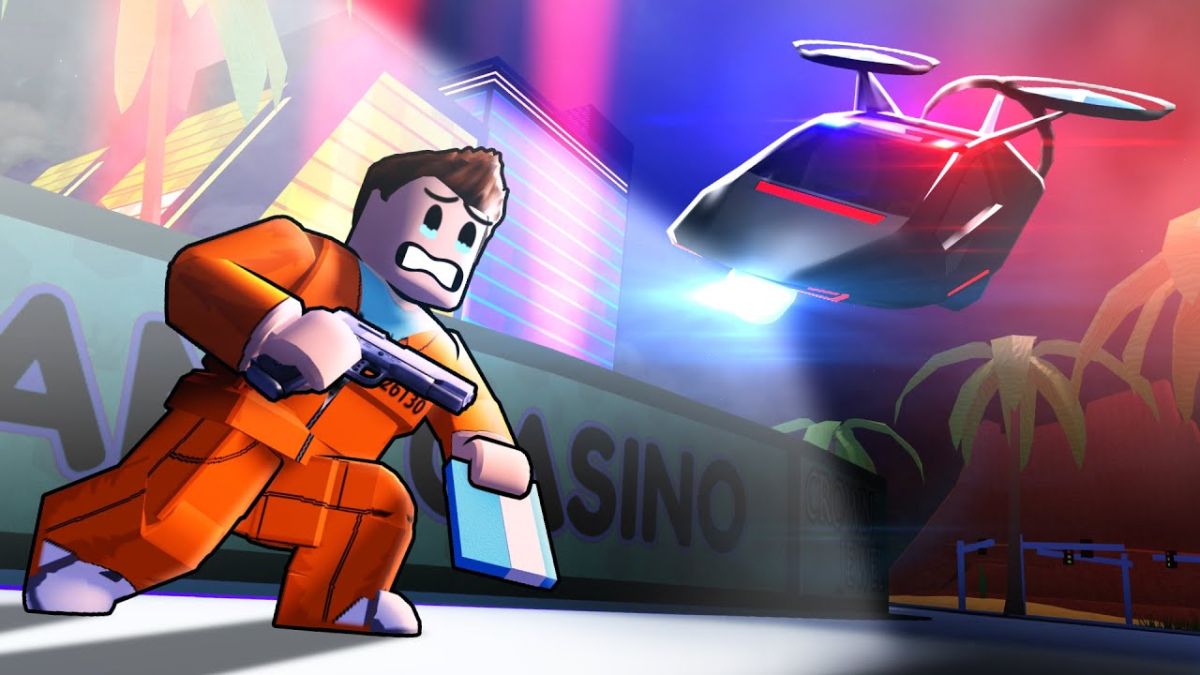
The prison gates are not the most dangerous part of Jailbreak. Once you understand the available escape routes, getting outside eventually becomes routine. The interesting part starts several minutes later, when you have money from a robbery, a vehicle worth protecting, perhaps a growing bounty, and no idea whether the car approaching in the distance belongs to another criminal or a police officer who has already predicted where you are going. Jailbreak builds its tension from that uncertainty rather than from complicated combat or scripted missions, and it is the reason a simple cops-and-robbers concept has lasted far longer than it probably should have on paper.
My early sessions were built around the obvious objective: escape, rob whatever was available, earn money, and buy faster vehicles. I treated police as moving obstacles rather than actual players with plans of their own. That worked until I began meeting officers who understood the map better than I did. They were not chasing directly behind me. They were waiting near likely exits, cutting across routes I assumed were safe, or arriving at robbery locations before I had finished. Suddenly, escaping stopped being about driving faster and became a question of whether I could make the other player guess wrong.
Playing as police later completely changed how I understood those same situations. Roads I had considered reliable escape routes as a criminal became predictable corridors. Robbery locations stopped looking like destinations and started looking like places where suspects would eventually need to leave. Instead of reacting to every crime notification immediately, I began thinking about what a criminal would probably do next. A fast vehicle still helped, but knowing the map and recognizing player habits often mattered more than simply having the highest top speed.
That relationship between the two roles is Jailbreak’s most important idea. Criminals create plans because they want efficient robberies and clean escapes, while police exist to make those plans unreliable. Each side gives the other something the game’s AI never could: intention. A police officer can bluff, wait, predict, or make a mistake. A criminal can abandon the obvious route, switch vehicles, hide, or deliberately lead a pursuit somewhere inconvenient. Even familiar robberies remain tense when another human player can interfere at exactly the wrong moment.
The map gradually becomes part of this contest. A tunnel is not just a tunnel after it saves you from several pursuits. A hill overlooking the city becomes useful because it offers visibility before committing to a route. Side roads, train tracks, bridges, mountains, and urban alleys acquire practical meaning through repeated escapes and failed arrests. Experienced players do not simply know where locations are. They know how those locations connect when someone is trying desperately to get away.
That is why Jailbreak feels strongest after the novelty of escaping prison has disappeared. The basic objectives become familiar relatively quickly, but familiarity does not remove tension because players continually reinterpret the same spaces. A perfect robbery route only remains perfect until enough police understand it. A reliable ambush works until criminals begin expecting it. The game survives because neither side owns the solution permanently.
The real question after leaving prison is therefore not whether you are free. It is how long you can stay that way once another player decides you should not be.
2. Every Chase Is Really a Contest Over Who Understands the Map Better
Speed looks like the obvious answer when you first start buying vehicles in Jailbreak. A faster car makes the map feel smaller, increases your chances of escaping a pursuit, and turns distant robbery locations into much easier targets. For a while, upgrading vehicles feels almost identical to upgrading power in a traditional progression game. Eventually, though, you meet someone with a slower vehicle who still manages to catch you, and that is when the importance of route knowledge becomes impossible to ignore.
A good pursuit rarely follows the road for very long. Criminals cut through terrain, change direction suddenly, use tunnels, climb hills, switch vehicles, or move toward locations where police movement becomes awkward. Officers respond by predicting rather than following. Instead of remaining directly behind the suspect, they take parallel roads, position near likely exits, or use aircraft to remove the advantage of terrain entirely. What begins as a race therefore becomes a moving strategy problem where both players are constantly trying to reduce the other person’s options.
I learned more about Jailbreak’s map from being chased than from deliberately exploring it. A shortcut becomes memorable when it saves a valuable bounty. A dead end becomes unforgettable when you discover it with police lights already behind you. Routes gradually acquire emotional associations because they are connected to success or failure rather than simply geography. After enough time, driving becomes almost instinctive and you begin choosing turns before consciously deciding why.
Vehicles deepen this because they do not all solve the same problems. Raw speed matters on long roads, acceleration matters after mistakes, off-road ability changes which shortcuts are practical, and aircraft can ignore much of the road network entirely. The best vehicle is therefore often situational rather than universal. Owning something expensive helps, but using it poorly can still put you exactly where an experienced opponent expects.
This is where Jailbreak’s progression works best. Buying a better vehicle does not merely increase a statistic. It changes which routes you can realistically attempt and how aggressively you can respond when a plan collapses. The map opens differently depending on what you drive, while experience determines whether you actually take advantage of that freedom.
After enough hours, the city stops looking like a collection of roads connecting robbery icons. It becomes a network of decisions. Every intersection offers a choice, every terrain feature can become an advantage, and every familiar shortcut carries one uncomfortable question: does the person chasing you already know about it too?

3. Robberies Stay Interesting Because the Objective Is Predictable but the Escape Never Is
Most robberies in Jailbreak eventually become familiar. You learn how long they take, where the exits are, which route is safest, and what vehicle you want waiting outside. Once that knowledge settles in, the robbery itself stops being the difficult part. The real tension begins when you leave with the reward and realize another player may already be waiting for you. That is where a routine objective becomes unpredictable again.
A jewelry store run can feel almost mechanical until police block the obvious escape. A bank robbery can turn into a longer chase because someone arrives late and catches the group during the getaway. A train can seem like an easy opportunity until another player tracks your movement and forces you to abandon the plan halfway through. These moments work because Jailbreak rarely changes the robbery rules dramatically, but it constantly changes who is interfering with them.
That difference matters. In many progression games, repetition eventually becomes dull because the same activity produces the same result. In Jailbreak, the objective may repeat, but the surrounding context changes with every server. One group of criminals may coordinate well, another may scatter immediately, and a single experienced police player can make an entire route feel unsafe.
This is why rewards are only part of the appeal. Money gives direction and progression, but the memory often comes from everything that went wrong after collecting it. A successful escape feels earned because the game gives other players a real chance to disrupt it.
The robbery provides structure. The pursuit provides the story.
4. Playing as Police Makes You Realize How Predictable Criminals Become
Many players spend most of their time as criminals because robberies feel more active and progression is easier to understand. Playing police for a while changes the experience completely because you begin seeing patterns you never noticed before. Criminals who seem unpredictable from inside a getaway car often become surprisingly easy to read when you are watching the map from the other side.
Most players repeat habits. They prefer certain robbery routes, use the same vehicles, head toward familiar escape paths, and panic in similar ways when a chase begins. As police, those habits become opportunities. You stop following every suspect directly and start asking where they are likely to go next. A good arrest often happens because you arrived early rather than because you drove faster.
This role reversal is one of Jailbreak’s strongest sources of replayability. The same city suddenly communicates different information depending on your objective. A criminal sees a road as a path to safety, while a police officer sees it as a predictable funnel. A robbery location looks like income to one side and a future interception point to the other.
The game is more interesting when both roles are active because each side teaches you how to improve the other. Criminal experience helps you predict escapes as police, while police experience teaches you which routes are too obvious when you switch back.
That constant exchange of knowledge gives Jailbreak more depth than its simple premise suggests. The real advantage does not always come from better equipment. It comes from understanding how the other side thinks before they make their next move.

5. Expensive Vehicles Feel Rewarding Until You Realize Money Only Solves Part of the Problem
Vehicle progression gives Jailbreak one of its clearest long-term goals. Early cars are functional, but every faster or more specialized option changes how confidently you move through the map. Better acceleration makes mistakes easier to recover from, stronger off-road performance opens new escape paths, and aircraft can bypass entire sections of the road network. Saving for a major purchase therefore feels meaningful because the reward affects how you play rather than simply increasing a hidden number.
The problem is that money can only take you so far. A powerful vehicle still becomes useless if you choose a predictable route, hesitate at the wrong intersection, or drive directly into an area where police are already waiting. Jailbreak constantly reminds players that equipment creates opportunities but does not remove the need for judgment. The most expensive option on the server cannot compensate for poor timing forever.
Grinding for vehicles can also become tiring, especially for newer players staring at prices that seem impossibly distant. Repeating robberies efficiently eventually turns progression into a routine, and once the excitement of each payout disappears, the process can feel more like saving than playing. This is one of the points where Jailbreak’s age becomes noticeable because long-term progression sometimes asks players to repeat familiar activities far more than the activities themselves deserve.
Still, vehicle ownership remains satisfying because every purchase carries practical consequences. A new car can make old routes viable again, while a helicopter can completely change how you think about pursuit and escape. The best progression moments come when a vehicle opens a new possibility rather than simply making an existing routine faster.
Money buys freedom of movement. Experience determines whether you use that freedom well.
6. Every Public Server Develops Its Own Personality Within Minutes
One of the reasons Jailbreak remains unpredictable is that the rules stay mostly the same while the people using them change constantly. Join one server and criminals may dominate the map, moving between robberies with almost no resistance. Join another and a coordinated group of police officers can make even leaving the prison feel dangerous. Some servers become highly competitive, while others drift into something closer to casual cooperation where players seem more interested in vehicles and exploration than arrests.
That difference can completely alter the mood of a session. A normally easy robbery becomes stressful when several skilled officers are actively watching the area. Playing police becomes frustrating when criminals coordinate well and constantly switch vehicles or routes. The map does not change, but the balance of power does, and players have to recognize that quickly.
I have had sessions where a single experienced officer changed how every criminal behaved. People stopped using obvious roads, robberies became more cautious, and groups formed naturally because traveling alone felt risky. In another server, police activity was so weak that the same objectives became almost mechanical. The contrast made it obvious that Jailbreak depends heavily on player behavior to create tension.
This also explains why public servers can feel inconsistent. Team quality, experience levels, and player intentions vary wildly, which means not every session produces the same excitement. Sometimes the lack of opposition exposes how repetitive the underlying robbery loop can become.
Yet that inconsistency is also valuable. Jailbreak never knows exactly what kind of server you are about to join, and neither do you. Within a few minutes, you begin reading the atmosphere and adjusting. The same map can feel relaxed, hostile, chaotic, or strangely cooperative depending entirely on who happens to be inside it.

7. Repetition Becomes Noticeable Once You Know Exactly What Every Robbery Will Ask From You
Jailbreak’s biggest long-term weakness appears when knowledge removes uncertainty from the PvE side of the game. After enough hours, many robberies stop feeling like problems to solve and become routines to execute. You know where to enter, what hazards to avoid, how long the objective takes, and which escape route gives you the best chance of keeping the reward. Efficiency improves, but surprise gradually disappears. At that point, the robbery itself is rarely what keeps the session interesting.
This is where other players become essential. A familiar bank run can still become tense when police arrive earlier than expected. A normally safe getaway can collapse because another criminal blocks the route or attracts attention at the wrong moment. The objective has not changed, but the presence of unpredictable people prevents complete automation. Without that interference, some activities reveal how repetitive they have become.
Grinding money amplifies the problem because expensive vehicles encourage players to repeat whichever robberies offer the best return. That creates a conflict between efficient progression and varied play. The fastest route to the next purchase is not always the most enjoyable way to spend an evening, especially once the same sequence has been repeated dozens of times.
The best way to avoid burnout is to stop treating every session as an optimization problem. Switching roles, trying unfamiliar vehicles, taking riskier escape routes, or simply playing around whatever the current server is doing often creates better memories than following the most profitable loop.
Jailbreak cannot completely hide the age of its core activities, and repetition is a legitimate criticism. Its strength is that the sandbox around those activities remains flexible enough to create new situations even when the objectives themselves are already familiar.
8. Jailbreak Is Still Worth Playing in 2026 Because the Chase Matters More Than the Reward
Jailbreak has been around long enough that its basic structure no longer feels revolutionary. Escaping prison, robbing locations, earning money, buying vehicles, and switching between police and criminal roles are ideas most longtime players understand almost immediately. What keeps the game relevant is not the novelty of those systems but the way they continue producing unpredictable conflicts between people who know the same map and want completely different outcomes.
The strongest sessions are rarely the most profitable ones. A successful robbery may earn money, but the pursuit afterward is usually what makes the event memorable. A police officer who predicts the escape correctly can turn an ordinary objective into a ten-minute chase, while one unexpected shortcut can save a bounty that seemed impossible to protect. Those situations create tension because both sides are making decisions in real time rather than following scripted behavior.
The weaknesses are easier to see in 2026. Grinding for expensive vehicles can feel excessive, robbery routines eventually become predictable, and server quality varies dramatically depending on who is playing each role. Balance discussions also remain unavoidable because even small changes to vehicles, weapons, or arrest mechanics can affect how fair each side feels. Players looking for deep narrative content or constantly changing PvE objectives may also find the structure too repetitive.
Still, Jailbreak understands its identity unusually well. It gives players enough structure to know what they should be doing, then leaves enough freedom for those plans to collapse in interesting ways. The map becomes more valuable as you learn it, vehicles change how you approach movement, and role switching ensures that the same location can feel completely different depending on whether you are escaping or hunting.
For players who enjoy open-world multiplayer, driving, pursuit, role-based competition, and unscripted stories, Jailbreak remains worth playing in 2026. The robberies may become familiar and the rewards may eventually lose their novelty, but the moment another player decides to stop you, everything becomes uncertain again. That uncertainty is still the heart of the game.

Conclusion
Jailbreak has lasted because its best moments are created by conflict rather than content volume. The robberies give players goals, vehicles create movement and progression, and the open map provides enough freedom to turn a simple escape into something unpredictable. What keeps those systems interesting is the presence of another person trying to stop you. A route that worked perfectly yesterday may fail today because someone else understands it just as well.
That is also why the game remains enjoyable after the novelty of escaping prison and buying new vehicles begins to fade. Long-term players are not simply repeating objectives. They are reading behavior, testing routes, switching roles, and learning how different servers change the balance between police and criminals. The same city becomes more interesting as players understand it more deeply because knowledge creates new strategies on both sides.
Jailbreak is not without obvious flaws. Repetition becomes harder to ignore after hundreds of robberies, progression can demand too much grinding, and some servers feel noticeably less engaging when one side lacks experienced players. Even so, the underlying design remains remarkably effective. It gives players clear goals without controlling every outcome, which leaves enough space for mistakes, improvisation, rivalry, and memorable escapes.
For a Roblox game built around such a simple premise, that longevity is impressive. Jailbreak does not need every robbery to feel new because the people involved keep changing what happens around it. The objective may be familiar, but the pursuit rarely is.
Frequently Asked Questions
Is Jailbreak still worth playing in 2026?
Yes. Jailbreak remains one of Roblox’s strongest open-world multiplayer experiences for players who enjoy police pursuits, robberies, vehicle progression, role-based competition, and unpredictable public servers. Some systems feel repetitive after long play sessions, but player interaction continues to create variety.
Is it better to play as a criminal or police officer?
Both roles offer different experiences. Criminal gameplay focuses more on robberies, escape routes, money, and avoiding capture, while police gameplay rewards prediction, interception, map knowledge, and understanding how criminals usually behave. Playing both roles makes it easier to improve overall.
What should new players spend money on first?
Useful vehicles generally provide the most noticeable early improvement because they affect travel, escape potential, and access to different routes. New players should prioritize practical mobility before chasing expensive purchases that offer only small advantages.
Does Jailbreak require a lot of grinding?
Progression can become grind-heavy, especially when saving for expensive vehicles or other major purchases. Repeating robberies efficiently speeds up progress, but doing only the most profitable activities can make the game feel repetitive more quickly.
Why is map knowledge so important?
Knowing shortcuts, tunnels, off-road routes, robbery exits, and likely interception points can matter as much as vehicle speed. Experienced players often win pursuits because they predict movement rather than simply reacting to it.
Do robberies become repetitive?
Yes, eventually. Once players memorize the steps and escape routes, many robberies become predictable. The uncertainty usually comes from police activity, other criminals, server behavior, and the chase that follows rather than the robbery mechanics themselves.
Is Jailbreak fun without friends?
Yes. Public servers often provide enough unpredictable interaction to make solo play enjoyable. Friends can improve coordination during robberies or police pursuits, but playing with strangers also creates many of the unexpected situations that give Jailbreak its personality.
What gives Jailbreak long-term replayability?
Its replayability comes mainly from player behavior, role switching, vehicle experimentation, map mastery, and unpredictable pursuits. The objectives eventually become familiar, but the people involved change how those objectives unfold from one server to another.