


1. More Realism Can Make an Open World Better Until Every Simple Action Starts Taking Too Long
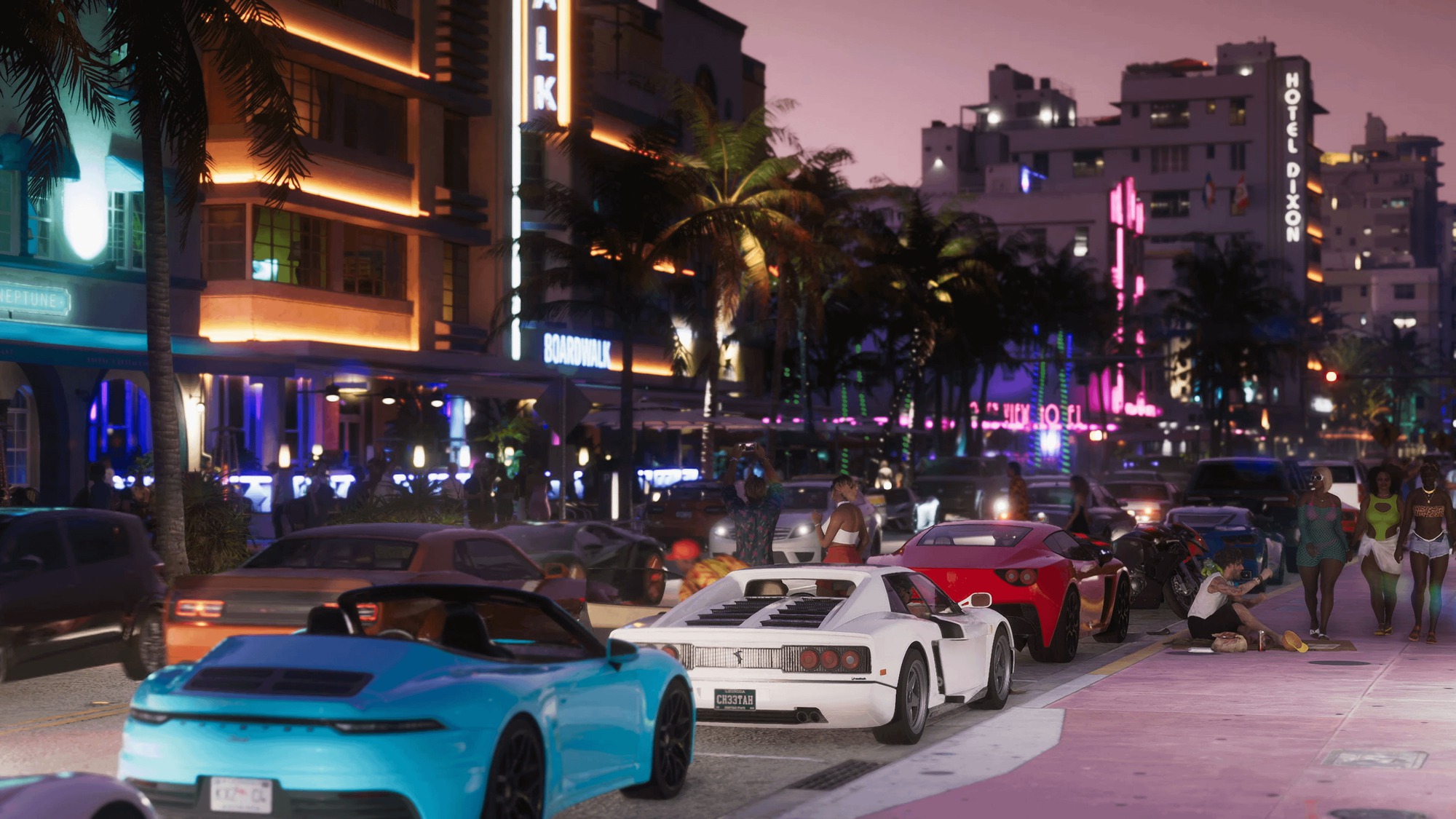
GTA VI arrives at a time when players expect open worlds to react more convincingly than ever, so improvements such as smarter NPC behavior, richer animations, detailed interiors, advanced police responses, dynamic environments, and more believable daily routines all seem like natural steps forward; however, each layer of realism introduces friction, and once enough of that friction accumulates, actions that once felt effortless can become unnecessarily slow. For example, a detailed animation for entering a vehicle may look impressive at first, but over time it becomes part of the cost of movement, which players must repeatedly pay.
This creates one of the hardest design challenges for any game that aims to feel realistic without becoming exhausting, because real life is filled with waiting, inconvenience, repetition, and countless small delays, yet most players do not come to GTA for an accurate simulation of those frustrations. Instead, they want a balance where the world feels believable while still allowing them to move through it comfortably and efficiently.
That balance becomes even more important because GTA is built around repetition, as players drive constantly, enter vehicles, purchase items, interact with weapons, move through buildings, escape danger, and retry activities after failure. Even a minor inconvenience can become significant when repeated across dozens of hours, which means Rockstar does not need to simulate everything simply because it can.
A stronger approach would be selective realism, where detail is focused on systems that create meaningful decisions, while routine actions remain fast enough to fade into muscle memory. In this way, the game can maintain both weight and momentum, ensuring that realism enhances the experience instead of slowing it down.
2. A Smarter Police System Should Make Players Think Differently, Not Simply Make Escaping More Annoying
Police behavior is one of the clearest areas where GTA VI could evolve, but simply making law enforcement more aggressive or persistent does not automatically improve gameplay. While it would be easy to increase accuracy, coordination, or response speed, those changes could make criminal activity less enjoyable if players are not given meaningful ways to respond.
A more interesting direction would involve systems where police intelligence changes how players behave before and during a crime, as factors like witnesses, vehicle descriptions, line of sight, location, and evidence could matter more than a simple wanted meter. In such a system, players would need to think about how they approach a situation, how quickly they leave, whether switching vehicles matters, and whether their escape route actually breaks observation.
The key idea is that realism should create choices rather than delays, because a highly realistic search system that forces players to hide for long periods might be believable but would likely feel tedious. Instead, evasion should remain interactive, offering multiple understandable ways to reduce pressure and regain control.
GTA has always worked because criminal actions lead to consequences that can be entertaining, so if GTA VI deepens those consequences, it must also expand the player’s ability to manipulate them. Police should feel smarter because they respond logically to events, not because they possess unrealistic knowledge or remain aggressive long after the situation has lost its tension.

3. Inventory Realism Could Change the Entire Game, but Restrictions Need to Create Decisions Worth Making
One area where realism could significantly reshape GTA VI is inventory management, as previous games allowed players to carry large arsenals with little limitation, which was convenient but clearly artificial. A more restricted system could make preparation, vehicle usage, safe locations, and weapon selection more meaningful, but it also risks turning preparation into tedious management.
Limiting the number of weapons a player can carry could improve combat by giving each choice more weight, since selecting a shotgun instead of a rifle would matter if both cannot be carried simultaneously. Additionally, storing equipment in vehicles could make those vehicles part of the strategy, while unexpected situations would become more engaging because players must rely on what they actually brought.
However, this approach only works if changing equipment remains convenient enough to support experimentation, because forcing players to travel long distances just to correct a previous choice would turn realism into punishment. Good limitations create meaningful tradeoffs, whereas bad ones create unnecessary errands.
The same principle applies to healing items, ammunition, and armor, as scarcity can increase tension but excessive management can disrupt the spontaneous gameplay that defines GTA. Players should be encouraged to think before major encounters, but they should not feel obligated to complete a checklist before every minor activity.
4. Better NPCs Matter Most When Their Behavior Changes What the Player Can Do
Expectations for GTA VI often include more realistic pedestrians, richer routines, and more dynamic reactions, which could make the world visually impressive; however, the real value of these improvements lies in whether they affect gameplay in meaningful ways. A technically advanced NPC system has limited impact if players cannot interact with it in ways that influence their decisions.
For example, while a detailed daily schedule for NPCs may be impressive, it becomes far more valuable when behavior directly affects gameplay, such as when witnesses react differently depending on context, influencing crime, stealth, or police response. This distinction highlights the difference between background simulation and useful simulation.
GTA VI does not need every NPC to live a fully simulated life, but it does need enough consistency for players to form expectations and act on them. Crowded areas should feel riskier than isolated ones, and different neighborhoods should respond differently to unusual behavior, creating a sense of context that players can understand and use.
At the same time, unpredictability should exist without becoming random, as players should be surprised occasionally but still able to understand why events occurred. This balance ensures that NPC behavior contributes to storytelling rather than confusion.

5. A Dense Map Could Be More Impressive Than a Huge One If Every Journey Has a Reason to Stay on the Ground
Map size is often a headline feature, but the actual experience of an open world depends more on how players interact with it than on its total area. A large map can feel empty if players rely on highways or fast travel, while a smaller but denser environment can feel expansive if it offers meaningful variety and reasons to explore.
GTA VI does not need to compete purely on size, because what matters more is whether players continue to engage with the world even after they become familiar with it. Density should not mean constant rewards, as that can turn exploration into a checklist, but rather a balance of activity and quiet spaces that feel natural.
Functional variety is key, as different routes should offer different advantages, whether speed, safety, or convenience. When geography influences decisions, the world becomes more than just scenery, and Vice City will feel large not because of its scale, but because of how players interact with it.
6. Story Missions Need to Trust the Systems More Than Previous GTA Games Sometimes Did
GTA has traditionally offered freedom in its open world while restricting players heavily during story missions, creating a disconnect between exploration and narrative. GTA VI has the opportunity to reduce this gap by allowing its systems to remain active during missions rather than limiting player options.
While some structure is necessary for pacing and storytelling, missions should still allow flexibility in preparation, approach, and execution. For example, a robbery mission can maintain a fixed objective while still allowing variation in how players plan and escape.
This approach would not only improve immersion but also increase replayability, as missions would feel different depending on player choices rather than remaining static experiences.

7. The Economy Must Give Expensive Things a Purpose Beyond Being Expensive
Money plays a central role in GTA, but progression can feel hollow if expensive items exist only to justify continued grinding. GTA VI has the opportunity to make the economy more meaningful by ensuring that purchases affect gameplay in tangible ways.
Properties, vehicles, and equipment should offer practical benefits, such as improved access, storage, or strategic advantages, rather than simply representing higher costs. When spending changes how players interact with the world, progression becomes satisfying instead of repetitive.
This is especially important if the game introduces deeper systems, as ownership can become a tool for solving problems rather than just a status symbol.
8. GTA VI Will Feel Revolutionary If Its Systems Disappear Into the Experience Instead of Constantly Showing Off
The most impressive technology is often the least noticeable, as systems like traffic, animation, and AI should feel natural rather than drawing attention to themselves. GTA VI will likely be judged not just by its features, but by how well those features integrate into a cohesive experience.
Instead of focusing on individual innovations, the game should aim for systems that interact seamlessly, allowing players to respond naturally to situations without thinking about the mechanics behind them. When everything works together, the world feels alive rather than constructed.

Conclusion
GTA VI faces enormous expectations, but its greatest challenge lies in balancing realism with enjoyment, because every new layer of detail introduces potential friction. While realism can enhance immersion, it can also slow down gameplay if not carefully managed.
Rockstar must therefore choose where realism adds value and where simplicity preserves fun, ensuring that the game remains engaging without becoming tedious. The ideal result is a balance where the world feels believable while still allowing players to act freely and spontaneously.
Frequently Asked Questions
What is the biggest challenge facing GTA VI?
Balancing realism with enjoyable pacing is one of the biggest challenges, as more detailed systems must create meaningful choices rather than unnecessary inconvenience.
Does GTA VI need to be more realistic than GTA V?
Greater realism can improve many aspects of the game, but it should remain selective to preserve speed, freedom, and experimentation.
Would a limited weapon inventory improve GTA VI?
It could enhance decision-making and preparation, but only if it avoids excessive management and remains flexible.
Does GTA VI need a bigger map than GTA V?
Not necessarily, because density and meaningful design often matter more than raw size.
How could police be improved without making the game frustrating?
By focusing on understandable systems like witnesses and visibility while giving players multiple ways to escape.
What should GTA VI improve about mission design?
Missions should allow more flexibility and make better use of the game’s systems without sacrificing narrative structure.
Why will the economy matter so much in GTA VI?
Because meaningful purchases can change gameplay and make progression more engaging.
What would make GTA VI genuinely feel next generation?
Seamless integration of systems that allows players to respond naturally without noticing the underlying mechanics.