




1. Driving Across Los Santos Is Not Dead Time, It Is the Structure Holding the Whole Game Together
Many open world games treat travel as a problem that eventually needs to be solved. Fast travel becomes more convenient, objectives move closer together, and players gradually learn how to skip the distance separating one activity from another. GTA V takes a different approach because driving is not merely transportation. It is the activity that connects almost everything else.
A mission may ask you to cross Los Santos, but the journey creates space for the city to establish itself. Traffic changes depending on where you are. Roads narrow, widen, climb into hills, cut through commercial districts, or open toward the countryside. Radio stations give ordinary travel a distinct mood, while the handling differences between vehicles make the same route feel different depending on what you are driving. Even after the map becomes familiar, movement rarely feels completely detached from play.
This is important because Los Santos would feel much smaller if players constantly teleported between objectives. The distance between Michael’s home, Franklin’s neighborhoods, Trevor’s desert environment, downtown Los Santos, the coastline, and Blaine County gives each part of the map a stronger identity. You understand where places are because you repeatedly travel between them rather than selecting them from a menu.
The driving model also sits in a useful middle ground. Cars have enough weight to make different vehicles recognizable, but the handling remains forgiving enough that reckless driving is usually entertaining instead of exhausting. A sports car can make a routine trip feel fast and aggressive, while an unsuitable vehicle can turn the same route into a minor adventure.
This is one reason returning to GTA V can feel immediately comfortable. You do not need to remember a complicated combat build or study a long list of systems before enjoying yourself again. Get into a car, choose a destination, and the game starts working almost immediately.
Los Santos is held together by roads.
More importantly, GTA V makes spending time on those roads feel like part of the experience rather than the price of reaching it.
2. GTA V Understands That Constant Excitement Would Eventually Make Nothing Feel Exciting
The biggest missions in GTA V are designed around spectacle. Heists escalate through preparation, vehicles, weapons, multiple characters, and tightly controlled sequences. Shootouts can become chaotic quickly, while police pursuits transform simple mistakes into extended escapes. Yet the game rarely sustains maximum intensity indefinitely.
After a major mission, players are often returned to ordinary life.
That change in pace matters.
You may drive home, purchase clothing, modify a vehicle, explore a neighborhood, switch characters, or simply wander until something else attracts attention. These activities are much quieter than a heist, but they prevent the larger moments from blending together.
A game that constantly demands urgency eventually makes urgency feel normal. GTA V gives action room to breathe. The quiet minutes before and after major events create contrast, making the next escalation more effective.
This rhythm is also one reason players can spend hours in the game without completing much of the story. There is rarely a feeling that every minute must contribute directly to progression. Driving without a destination is allowed to be enjoyable. Buying an unnecessary car, testing it in the hills, damaging it five minutes later, and returning to a customization shop can consume an entire session without producing any meaningful narrative achievement.
From a productivity perspective, almost nothing happened.
From the player’s perspective, that may still have been a good evening.
GTA V understands that an open world needs room for wasted time. Without those quieter stretches, Los Santos would become a sequence of missions connected by menus rather than somewhere players can temporarily inhabit.

3. Switching Between Michael, Franklin, and Trevor Changes the Mood Before It Changes the Gameplay
The three protagonist system is usually discussed as a technical feature because players can move between Michael, Franklin, and Trevor during parts of the story and certain missions. Its more interesting effect is emotional. Changing characters often feels like changing the kind of game you are currently playing.
Michael carries the atmosphere of comfortable failure. He has money, a large home, and many things Franklin initially wants, yet his life is filled with dissatisfaction and conflict. Spending time with him gives Los Santos a particular tone because luxury rarely appears to have solved the problems it promised to solve.
Franklin sees the city differently. His story is more closely tied to movement, ambition, and the question of whether changing circumstances actually means escaping the environment that shaped him. Driving through Los Santos as Franklin often feels connected to possibility because his position is less settled.
Trevor breaks almost every sense of stability. His environment, behavior, and relationships create a harsher rhythm, particularly when the story shifts away from central Los Santos. Switching to him can make the same game suddenly feel less controlled.
This structure helps prevent the campaign from becoming emotionally flat. Spending too long with one protagonist could make their problems repetitive, but moving between three lives repeatedly resets perspective. One character may be dealing with family conflict while another is pursuing money or creating problems that seem completely disconnected from normal social behavior.
The system is not perfect. Dividing attention between three protagonists means some relationships and personal arcs receive less time than they might have in a story centered on one character. Franklin in particular can sometimes feel caught between the stronger dramatic identities of Michael and Trevor.
Still, switching characters gives GTA V an unusual ability to change tone without changing worlds.
Los Santos remains the same city.
The person looking at it changes what that city seems to mean.
4. Money Is Most Interesting Before You Have Enough of It
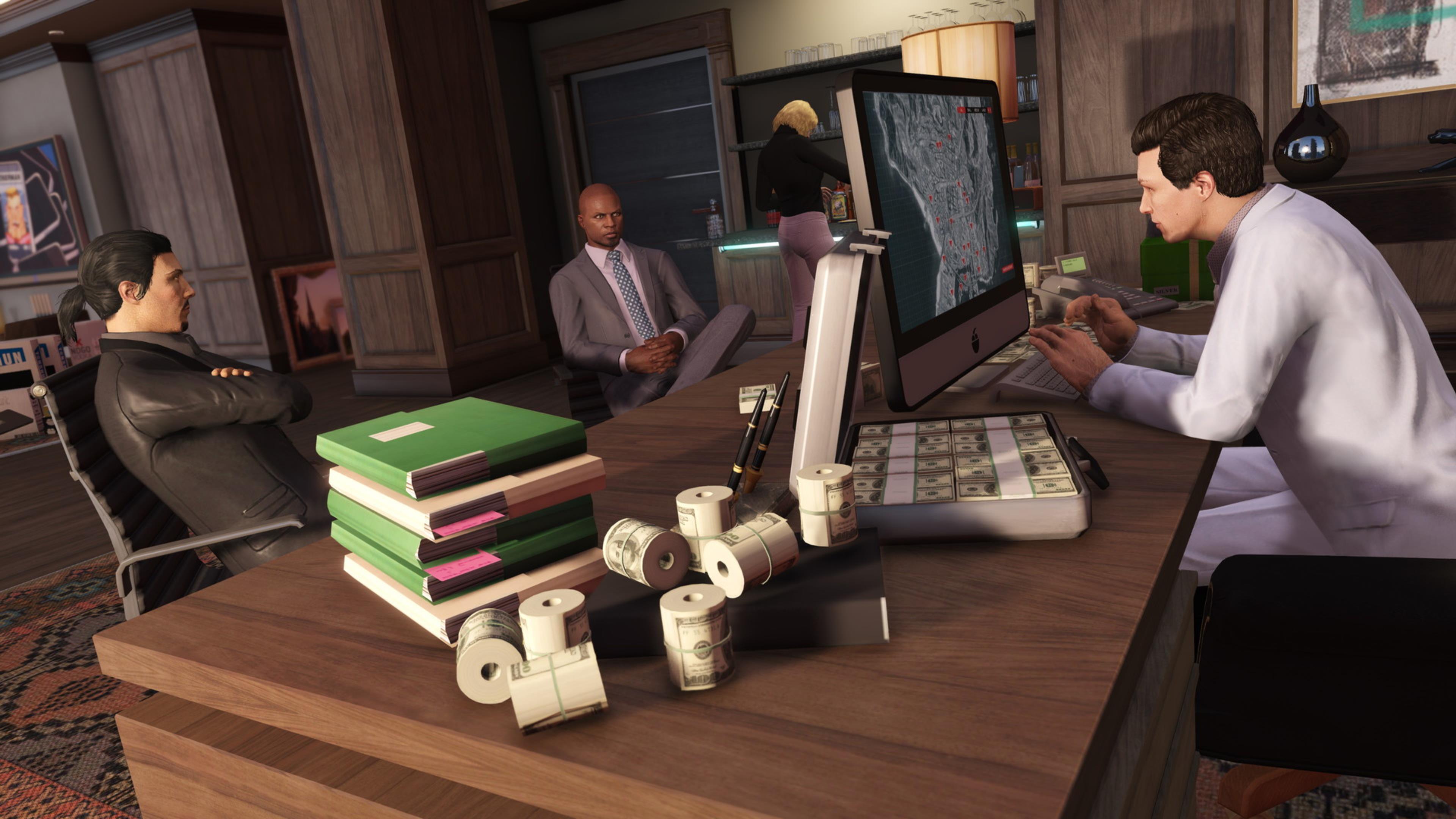
GTA V spends a great deal of time making money feel important. Characters talk about it, crimes are organized around it, properties and vehicles require it, and major heists promise financial transformation. Yet the relationship between money and enjoyment becomes increasingly complicated as the game progresses.
Early on, limited resources create clear decisions. Purchasing one vehicle may mean delaying something else. A successful job changes what feels affordable. Expensive objects represent possibilities rather than items already sitting in a garage.
Once wealth increases, some of that tension disappears.
This is thematically appropriate because GTA V repeatedly questions whether financial success actually provides satisfaction. Michael already has many symbols of conventional success and remains miserable. Trevor wants control more than comfort. Franklin’s ambition gives money meaning because it represents distance from his earlier circumstances, but acquiring more does not automatically answer what should happen afterward.
The same pattern appears in gameplay. Money is most motivating when it changes access. Buying a useful vehicle, property, weapon, or upgrade feels significant when resources are limited. Once the economy becomes less restrictive, purchases can gradually turn into collection rather than transformation.
GTA Online extends this relationship much further by turning wealth accumulation into a major long term structure. Expensive vehicles, properties, businesses, and other goals provide reasons to continue earning, but they can also make money feel like an obligation rather than a reward when too much play becomes centered on financing the next purchase.
The strongest financial progression gives players new ways to spend time.
The weakest simply gives them another expensive object to own.
GTA V is surprisingly interesting when viewed through that difference because its characters and its players repeatedly chase wealth for similar reasons. Money promises freedom.
The difficult question is what you actually do once you have it.

5. Small Activities Make Los Santos Feel More Convincing Than Another Hundred Mission Markers Would
GTA V contains many activities that are easy to dismiss because they do not define the main story. You can modify cars, purchase clothing, visit stores, take part in recreational activities, explore neighborhoods, search for side encounters, or simply spend time interacting with systems that contribute very little to completing the campaign.
Individually, many of these activities are simple.
Together, they give Los Santos texture.
A city feels more convincing when not every building exists because a mission will eventually send you there. Shops, roads, beaches, residential areas, highways, rural spaces, and entertainment districts create the impression of a place with functions beyond the protagonist’s immediate needs.
The same applies to vehicles. GTA V would still be mechanically functional with a much smaller selection of cars, but variety helps players create personal habits. Some people collect vehicles because of performance. Others care more about appearance, customization, or simply driving something unusual.
These preferences give free roam sessions direction without requiring formal objectives.
The weakness is that many smaller activities lack enough mechanical depth to remain interesting indefinitely. Once their novelty fades, some become background features rather than meaningful reasons to continue playing. GTA V often creates the impression that more is possible than its systems actually allow.
Yet that abundance still matters.
Open worlds are convincing partly because players can ignore most of what they contain. When every location exists only to serve a quest, the world begins feeling like a checklist.
Los Santos works because you can spend an evening doing things that the story does not care about.
6. Knowing the Map Too Well Eventually Becomes a Strength Instead of a Problem
Exploration usually depends on unfamiliarity. A new world is exciting because players do not know what exists beyond the next road or mountain. GTA V cannot preserve that feeling forever. After enough time, Los Santos becomes extremely familiar.
You know which highways lead north. You recognize shortcuts through the city. Certain intersections immediately remind you of past missions or police escapes. The distance between neighborhoods becomes intuitive.
Normally, that level of familiarity might make an open world boring.
In GTA V, it often creates comfort.
Driving becomes more fluid because you are no longer following the minimap constantly. You anticipate turns, choose alternative routes, and understand where a pursuit might become difficult. Places also accumulate personal memories that have nothing to do with their official purpose.
One street may be remembered because a mission happened there. Another matters because of a ridiculous crash during free roam. A parking lot that has no narrative significance might still remind you of hours spent experimenting with vehicles or playing with friends.
The map gradually changes from something you explore into something you recognize.
This is an underrated form of longevity. Players do not always return because they expect to discover a completely new location. Sometimes they return because familiarity reduces friction. Los Santos becomes easy to enter mentally because its geography is already understood.
There is an obvious cost. A familiar map cannot produce the same wonder as a first playthrough, and repeated routes eventually expose how much of the world is static.
Yet recognition creates another kind of attachment.
You may stop wondering what is around the next corner.
Instead, you remember exactly what happened there last time.

7. GTA Online Changed Los Santos From a Setting Into a Routine
The single player campaign gives Los Santos a narrative purpose. Locations are connected to Michael, Franklin, Trevor, missions, relationships, and the broader satire surrounding the city. GTA Online gradually changes that relationship.
The map becomes practical.
A road matters because it leads efficiently toward an activity. A property matters because of what it enables. Particular areas become associated with money making, vehicles, social sessions, competition, or repeated routines rather than story events.
This shift helps explain how the same map can support such long term engagement.
Players are not experiencing Los Santos as a narrative setting every time they return. They are using it as a familiar social and mechanical space. The city becomes the background for personal goals.
That creates enormous longevity, but it also changes how players perceive progression. Once efficiency becomes important, activities can be judged according to income, time, and return rather than pure enjoyment. A mission may be entertaining but ignored because another method is more profitable.
The danger is allowing optimization to replace play.
GTA has always been strongest when plans can be abandoned. A profitable session may unexpectedly turn into vehicle experimentation, an unnecessary chase, or an hour spent doing something financially pointless with other players.
Those diversions preserve the sandbox.
When every action is evaluated according to how quickly it funds the next purchase, Los Santos risks becoming a workplace with better cars.
The healthiest version of GTA Online is the one where money provides possibilities without becoming the only reason those possibilities matter.
8. GTA V Is Still Worth Playing Because It Is Easy to Find Something Enjoyable Without Committing to a Major Goal
One of GTA V’s greatest strengths is how little commitment it requires before something entertaining can happen. You can continue the story, complete side content, drive, customize vehicles, explore, create trouble, play online, or simply move through the city until a new idea appears.
This flexibility makes returning unusually easy.
Many large games become difficult to revisit after a long break because players forget builds, crafting systems, questlines, or complicated controls. GTA V is comparatively forgiving. The basic language of the game remains simple enough that returning players can become comfortable quickly.
Its age is still visible. Some mission structures are more restrictive than the surrounding sandbox suggests, and certain mechanics feel less modern than the presentation once did. Repeated content can become tiring, while the enormous longevity of GTA Online has inevitably made parts of its progression feel built around long term accumulation.
The single player story also contains design choices that will not appeal equally to everyone. Its satire can be blunt, and the contrast between open world freedom and tightly controlled mission requirements occasionally feels frustrating.
Still, GTA V continues to offer something unusually valuable.
It is a large game that does not always demand a large plan.
You can enter Los Santos with no clear objective and still find a reason to remain there longer than expected.
That quality has aged remarkably well.

Conclusion
GTA V is remembered for heists, crime, satire, three protagonists, police chases, and a massive open world, but its longevity depends just as much on what happens between those headline features. The drive to the next mission matters. The unnecessary stop at a garage matters. Switching characters because you are tired of one storyline matters. Taking the long route for no practical reason matters.
These ordinary moments create rhythm.
Without them, Los Santos would be a collection of missions and activities. Because they exist, the city becomes somewhere players can spend time even when they are not actively trying to accomplish anything.
That does not make GTA V timeless in every respect. Its mechanics show their age in places, mission freedom can be inconsistent, and long term progression sometimes becomes more repetitive than meaningful.
Yet the game still understands a principle many open worlds struggle with.
Players do not need to be entertained at maximum intensity every minute.
Sometimes they need a good car, a familiar road, a destination they may or may not bother reaching, and enough freedom to change their mind halfway there.
That is why Los Santos remains easy to return to.
Not because something extraordinary always happens.
Because even when very little happens, spending time there can still feel worthwhile.
Frequently Asked Questions
Is GTA V still worth playing in 2026?
Yes. The game still offers a strong single player campaign, an accessible open world, enjoyable driving, extensive side activities, and GTA Online for players interested in long term multiplayer progression. Some systems show their age, but the overall structure remains highly playable.
Why does GTA V still feel enjoyable after the map becomes familiar?
Familiarity changes how players interact with Los Santos. Instead of constantly discovering locations, they begin using map knowledge for faster navigation, favorite routes, escapes, vehicle testing, and personal routines. The city becomes comfortable rather than simply unknown.
Which protagonist is the most important in GTA V?
Michael, Franklin, and Trevor serve different purposes, so there is no single answer. Michael represents a version of success that failed to create satisfaction, Franklin is closely tied to ambition and upward movement, while Trevor brings instability and exposes a more extreme side of the game’s criminal world.
Is driving really one of GTA V’s most important mechanics?
Yes. Driving connects missions, exploration, side activities, character locations, customization, and free roam. Because players spend so much time traveling, the handling model and road network strongly influence the overall experience.
Does GTA V become repetitive after finishing the story?
It can, especially for players who need constant new objectives. Replayability depends heavily on whether you enjoy free roam, vehicles, side content, experimentation, GTA Online, or simply spending time in the world without following a strict progression path.
Is GTA Online necessary to enjoy GTA V?
No. The single player campaign remains a complete experience by itself. GTA Online offers a different structure focused more heavily on multiplayer activities, accumulation, properties, vehicles, money, and long term goals.
What is GTA V’s biggest weakness today?
The contrast between open world freedom and restrictive mission design remains one of its most noticeable weaknesses. Some missions allow less experimentation than the sandbox outside them suggests, while certain older mechanics and repetitive progression systems are more visible after many years.
What makes GTA V different from many other open world games?
Its greatest strength is not simply map size or the amount of content. GTA V makes ordinary time between objectives enjoyable through driving, character switching, side activities, vehicle ownership, recognizable locations, and a world that remains easy to reenter even after long breaks.