



1. The Best Thing About GTA V Is How Easily You Can Forget What You Were Supposed to Be Doing
I was supposed to drive Franklin to a mission marker.
Nothing complicated. A few minutes across Los Santos, start the mission, continue the story.
Then I missed a turn.
A sports car passed in the opposite direction, so I stole it. That attracted the police. Escaping them pushed me onto a road I rarely used, which eventually climbed into the hills above the city. By the time the wanted level disappeared, sunset had turned the skyline orange and the mission marker was somewhere behind me.
I never went back that evening.
That sequence explains GTA V better than almost any scripted heist could. The game's greatest trick isn't simply giving players a huge map. Plenty of open worlds are enormous. What makes Los Santos different is how easily the space between objectives becomes more interesting than the objectives themselves.
Drive anywhere without a plan and something begins pulling at your attention. A dirt road disappears into the hills. A strange encounter appears beside the highway. An aircraft passes overhead. You spot a vehicle you suddenly decide you need, despite having absolutely no reason to own it. Twenty minutes later, the original plan has dissolved into a chain of decisions that would sound completely pointless if you tried explaining them afterward.
Yet those are often the sessions I remember.
Los Santos supports this kind of distraction because it rarely feels like scenery built only to connect mission locations. Downtown has a different rhythm from Vespucci. The expensive hills around Vinewood feel disconnected from the industrial edges of the city. Drive far enough north and traffic thins, buildings disappear, and the same game suddenly feels quieter. Sandy Shores isn't simply Los Santos with different textures. It carries a sense of neglect that changes how being there feels.
Even the roads contribute to that identity. I can navigate certain parts of Los Santos almost entirely from memory now, not because the game forced me to memorize them, but because hundreds of chases, crashes, shortcuts, and completely unnecessary drives gradually turned the map into familiar territory.
That may be GTA V's most impressive achievement in 2026.
I no longer think of Los Santos as a collection of missions.
I think of places where things happened.
A junction where a police chase went catastrophically wrong. A mountain road where I destroyed a car I had spent far too much money modifying. A rooftop I reached once and then spent half an hour trying to remember how. A stretch of coastline I drove along late at night simply because the radio station matched the weather perfectly.
None of those moments mattered to the story.
They mattered to me.
And more than a decade later, that remains the strongest reason to return. GTA V doesn't merely give you a city to complete.
It gives you somewhere to get distracted.
2. GTA V Is Strangely More Restrictive During Missions Than It Is Everywhere Else
There is a contradiction at the heart of GTA V that becomes more noticeable the longer you play. Outside missions, the game encourages experimentation. You can approach Los Santos from almost any direction, take whatever vehicle happens to be nearby, ignore roads completely, improvise escapes, and turn simple errands into ridiculous stories. Then a story mission begins, and suddenly the same world becomes far less tolerant of creativity.
Drive too far from the intended route and the mission may fail. Use the wrong vehicle, leave a character behind, or attempt a shortcut the designers did not expect, and the game often pulls you back toward a carefully controlled sequence. It is one of the strangest contrasts in GTA V because the sandbox teaches players to think freely while many missions quietly ask them to follow instructions.
That tension did not bother me as much when I first played the campaign. The spectacle was enough. Heists, shootouts, chases, and character switching created such strong momentum that I rarely questioned how tightly everything was choreographed. Returning years later, the limitations are easier to see. Modern open-world games have made players more sensitive to invisible boundaries, and GTA V occasionally reveals them at exactly the wrong moment.
Yet the restriction also explains why so many missions remain memorable. Rockstar controls pacing aggressively because it wants specific moments to land with cinematic precision. A getaway needs to reach a certain street before dialogue continues. A firefight needs enemies positioned in a particular way. A vehicle sequence needs the camera, music, and action to align.
The result is a campaign that often feels directed rather than truly systemic.
That is not necessarily a failure. In fact, some of GTA V's strongest set pieces depend on that control. The problem is that Los Santos outside those missions constantly proves how entertaining unpredictability can be. When the game gives you complete freedom, accidents become stories. When it removes that freedom, you sometimes become aware that you are performing the correct version of an event instead of discovering your own.
GTA V works because both approaches coexist.
But after all these years, the open world usually wins that argument.

3. Driving Is Not Just Transportation in GTA V. It Is the Way Los Santos Makes Sense
GTA V would be a very different game if driving were merely a practical way to move between objectives.
It is not.
Driving is how players learn Los Santos. It is how the city's scale becomes understandable, how neighborhoods develop identity, and how empty time between missions becomes part of the experience. You do not simply teleport from downtown to the desert. You watch the city thin around you. Traffic changes. Roads widen. Buildings disappear. The radio continues playing while the scenery slowly tells you that you have gone somewhere else.
This is why vehicle handling remains one of GTA V's most durable strengths. Cars are accessible enough that anyone can immediately enjoy them, but different categories still have distinct personalities. A lightweight sports car encourages reckless speed through city streets. A heavy truck changes how corners feel. Motorcycles turn traffic into a moving obstacle course, while off-road vehicles suddenly make hills and dirt tracks look like invitations.
Some of my favorite sessions have involved no meaningful objective at all. I would choose a car, set a vague destination somewhere on the opposite side of the map, and drive without using the most efficient route. That sounds like nothing, but GTA V understands that movement can be entertainment when the world surrounding it has enough texture.
The radio is a huge part of that experience. A song becomes associated with a particular road, weather condition, or time of day. Drive through Los Santos at night with the right station playing and the game temporarily stops feeling like a crime sandbox. It becomes a mood.
That is also why crashes matter more than they should. A missed corner can completely redirect a session. A collision with traffic may trigger an argument, a police response, or an impulsive decision to steal something faster. One tiny mistake can create ten minutes of unscripted chaos.
Driving ties all of GTA V's systems together because it sits between everything else.
Missions begin after drives. Police chases become driving challenges. Exploration happens through driving. Random events interrupt driving. Even boredom often leads to driving somewhere just to see what happens.
Los Santos feels large because you travel through it.
More importantly, it feels familiar because you keep doing it.
4. Michael, Franklin, and Trevor Make Los Santos Feel Like Three Different Cities at Once
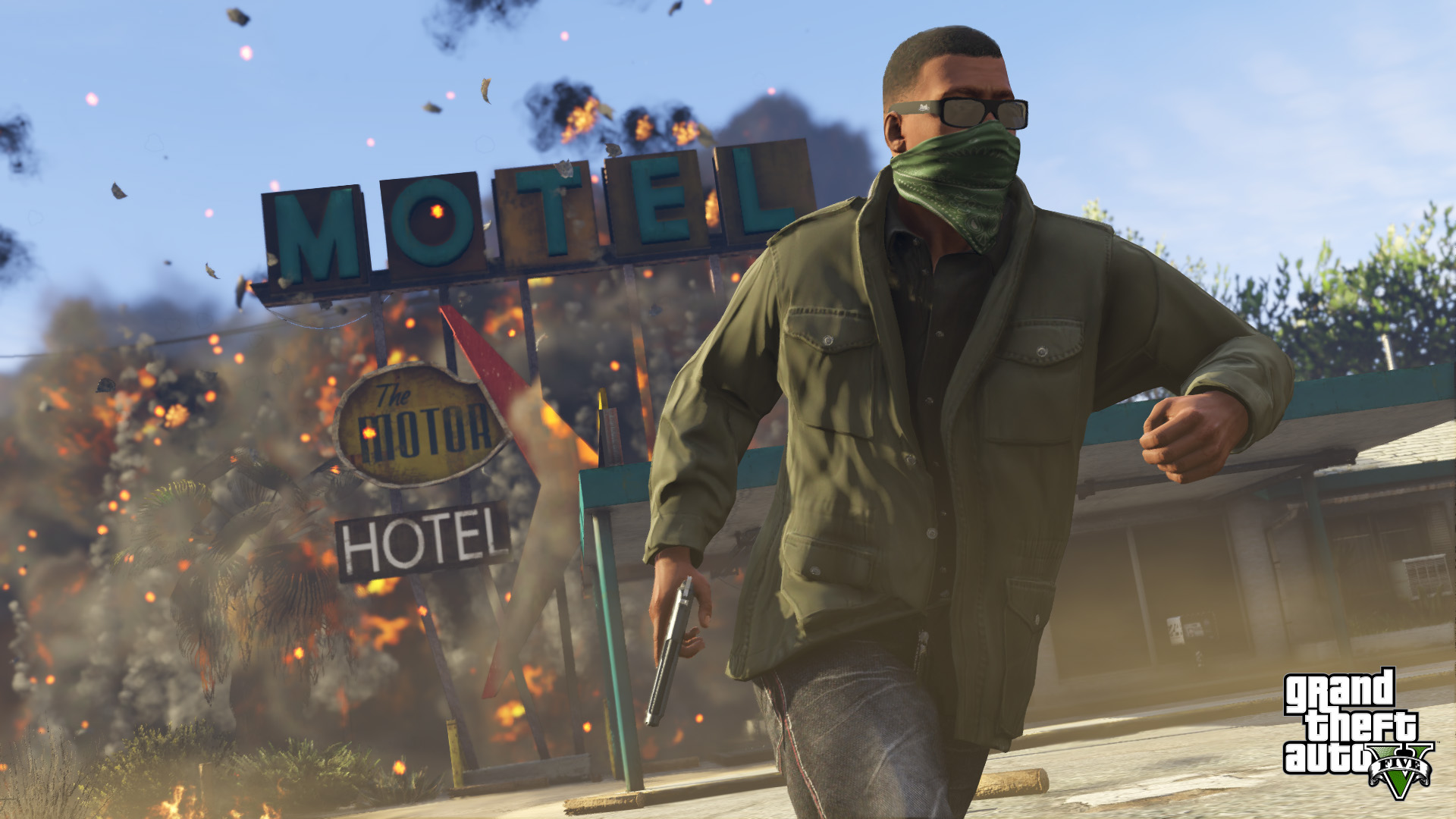
GTA V’s three-character structure is easy to remember as a technical gimmick, but its real strength is perspective. Michael, Franklin, and Trevor do not simply offer different abilities. They change what Los Santos means depending on who you are controlling.
Michael moves through wealth, boredom, family tension, and the kind of success that has already started to rot from the inside. His Los Santos is expensive homes, therapy sessions, old regrets, and the uncomfortable realization that getting everything you wanted does not guarantee satisfaction. Franklin sees the same city from a completely different angle. For him, Los Santos still represents upward movement. He wants distance from the life around him, but the city constantly reminds him how difficult that separation can be.
Then there is Trevor.
Trevor breaks almost every sense of stability the other two characters create. Switching to him can feel like entering another version of the game entirely. The city becomes less structured, the desert becomes more important, and normal social behavior suddenly feels optional. Some of the funniest transitions in GTA V happen because the game drops you into whatever situation Trevor has somehow created while you were away.
What makes the trio work is contrast. Michael is already inside the world Franklin wants to enter, while Trevor exists almost outside the rules both of them still pretend to respect. Their relationships create tension because they represent different forms of ambition, failure, loyalty, and self-deception.
Character switching also changes pacing beautifully. A mission can move between locations and viewpoints without feeling like a traditional cutscene transition. During larger sequences, swapping characters turns action into something closer to editing a film in real time.
The system is not perfect. Some character arcs feel stronger than others, and the campaign occasionally uses Trevor’s unpredictability as an easy shortcut to chaos. Still, the three-protagonist structure remains one of GTA V’s most distinctive ideas.
Los Santos feels larger because no single character owns it.
Each of them reveals a different version of the same place.