

1. GTA VI Has to Compete With a Game People Already Know Almost Too Well
Most sequels compete with memories. GTA VI has a harder problem. It must compete with habits.
For more than a decade, GTA V became familiar in a way few games ever do. Players know how police pursuits usually unfold, how vehicles behave, which roads connect major areas, how NPCs react to chaos, and what kinds of distractions can turn a simple drive into an hour-long detour. Even people who stopped playing years ago often retain an instinctive understanding of how a Grand Theft Auto world is supposed to behave.
That familiarity creates a strange challenge for GTA VI. Improving graphics will be immediately noticeable, but visual quality alone cannot make the previous game feel obsolete. A more detailed city can still feel fundamentally familiar if pedestrians react the same way, police follow the same logic, missions rely on the same structures, and exploration continues to revolve around moving between icons.
The real leap has to appear in ordinary situations.
What happens when you walk into a crowded location and cause trouble? How long do NPCs remember unusual behavior? Does law enforcement respond differently depending on where a crime occurs, who witnessed it, or how the player escapes? Can a minor interaction develop into something unexpected without obviously becoming a scripted event?
These questions matter more than simply asking how large the map will be.
GTA V was already enormous enough to support hundreds of hours of play. Making the next world substantially larger would be technically impressive, but size becomes meaningless if much of that space functions as travel between more interesting destinations. GTA VI needs density in the behavioral sense rather than only architectural density.
A convenience store should not be interesting merely because players can enter it. It becomes interesting if the people inside react believably when circumstances change. A neighborhood becomes memorable when its rules, police presence, traffic, crowds, and social atmosphere create behavior that feels different from somewhere else.
This is where expectations become dangerous. Players have spent years imagining GTA VI as the game where every weakness of modern open worlds will somehow disappear at once. They want extraordinary visual fidelity, enormous freedom, sophisticated AI, detailed interiors, strong storytelling, deeper physics, better police systems, meaningful exploration, and an online world capable of lasting another generation.
No game can maximize everything simultaneously.
The most important question is therefore not whether GTA VI contains more.
It is whether the first ordinary hour makes returning to GTA V feel like stepping backward.
2. Lucia and Jason Could Solve One of GTA V’s Biggest Problems: Three Protagonists Sometimes Created Distance Instead of Intimacy
GTA V’s three-character structure was technically brilliant. Michael, Franklin, and Trevor allowed the story to jump between social classes, locations, personalities, and gameplay styles without forcing one protagonist to represent every side of Los Santos. The system improved pacing and gave Rockstar enormous flexibility.
It also created emotional distance.
Just as one character’s personal conflict started developing momentum, the story could switch elsewhere. Franklin’s ambitions occasionally felt underexplored beside Michael’s family problems and Trevor’s destructive history. The three protagonists created breadth, but breadth sometimes came at the expense of sustained intimacy.
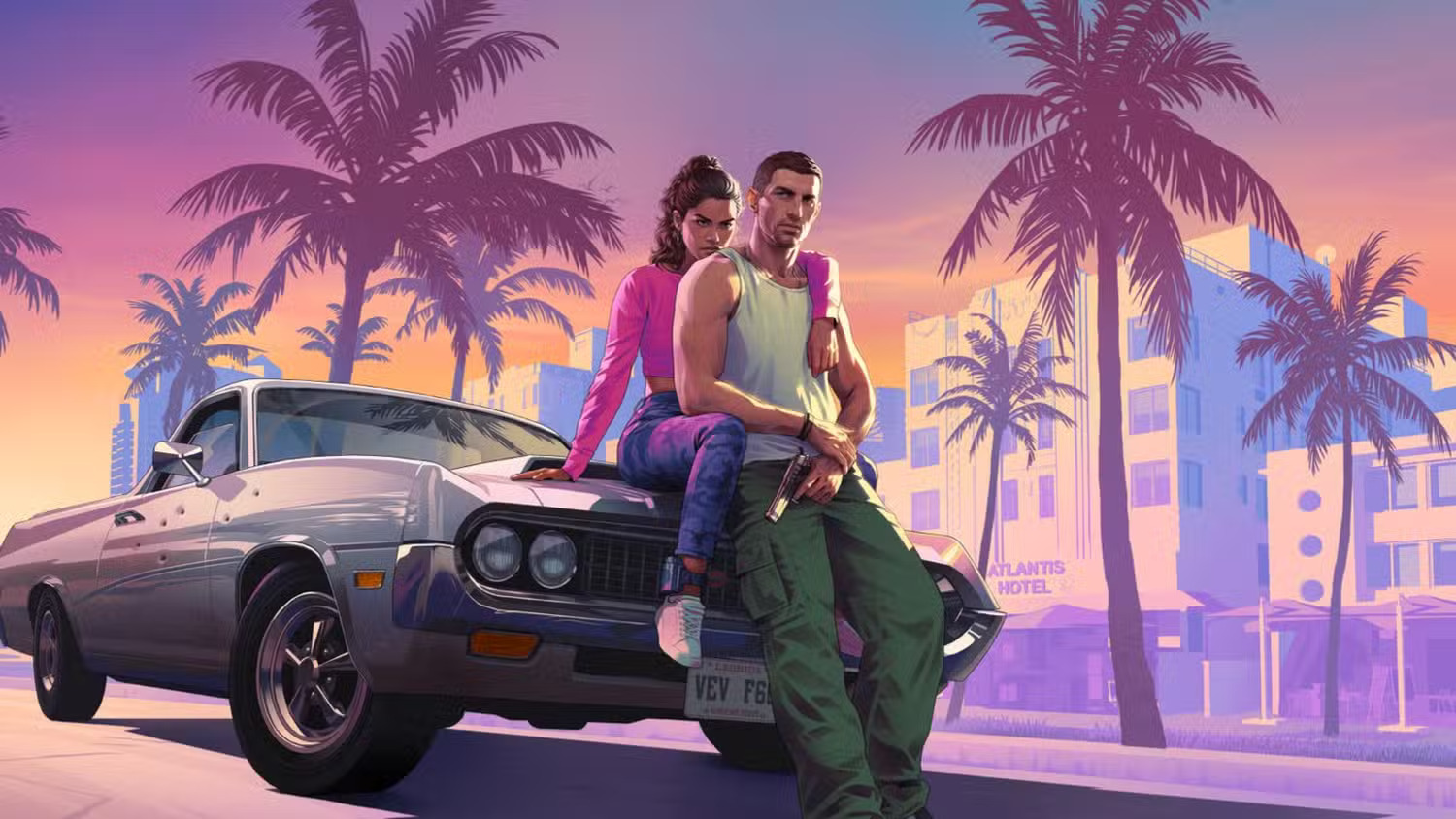
GTA VI has an opportunity to approach character differently through Lucia and Jason.
A story centered more tightly around two people can make criminal decisions feel personal in ways that large ensemble storytelling often struggles to maintain. When partners depend on one another financially, emotionally, and practically, failure affects more than mission completion. Every robbery, escape, betrayal, or disagreement can potentially change the relationship at the center of the game.
That could also transform free-roam gameplay.
Imagine the difference between switching characters because the interface allows it and switching because each protagonist is independently doing something that affects their shared situation. One might be preparing equipment while another handles a different objective. A failed decision could create consequences that the other character later encounters.
The strongest possibility is not simply cooperative criminal action.
It is tension.
Two people committing crimes together do not necessarily want the same future. One may become more cautious as the consequences increase while the other becomes more ambitious. Money can create security but also disagreement over risk. Loyalty becomes more interesting when survival depends on someone whose priorities may eventually diverge from your own.
This kind of relationship could give GTA VI a more emotionally focused story without sacrificing satire or chaos.
The danger is making the relationship overly scripted. GTA works because players regularly behave in ways the narrative cannot realistically acknowledge. A deeply serious emotional scene can feel strange if the player spent the previous fifteen minutes causing senseless destruction.
Rockstar has always lived with that contradiction.
GTA VI may need to handle it more carefully than ever.
Lucia and Jason will be judged not only by their cutscenes, dialogue, or performances. Their relationship must survive the enormous behavioral freedom expected from the player.
If it works, GTA VI could feel more personal than GTA V despite potentially being much larger.

3. A More Realistic World Will Only Be Better If Players Are Still Allowed to Break It
Every new detail shown or discussed around GTA VI naturally increases expectations for realism. Players imagine more believable crowds, richer interiors, realistic vehicle behavior, smarter police, improved physics, detailed weather, and NPCs reacting more naturally to what happens around them.
All of that sounds desirable.
There is also a danger.
GTA has never been successful because it perfectly simulates reality. It works because reality is recognizable enough that breaking its rules becomes entertaining. Cars need weight, but they also need to survive the kind of driving players actually enjoy. Police should feel intelligent, but not so realistically efficient that committing crime becomes an administrative nightmare. NPC behavior should be believable, yet unpredictable enough to produce comedy when systems collide.
Too much realism can make freedom expensive.
A highly detailed law enforcement system might sound impressive until every minor crime produces long-term consequences that interrupt exploration. Complex vehicle damage could add immersion while making spontaneous driving frustrating. More realistic economic systems might strengthen the world but create tedious barriers between players and the things they actually want to do.
The best version of GTA VI will probably need selective realism.
Details should make actions feel more convincing without constantly making those actions harder to enjoy.
This balance becomes especially important because visual realism changes player expectations automatically. When characters, streets, weather, crowds, and interiors look increasingly believable, obviously artificial behavior becomes easier to notice. A beautifully rendered NPC repeating simplistic reactions may feel more unnatural than the same behavior did in an older game.
Rockstar therefore faces an escalating problem. Better graphics demand better systemic behavior because the illusion becomes less forgiving.
The solution is not necessarily simulation.
It is consistency.
Players will accept absurdity if the world responds according to understandable rules. A ridiculous police chase can still feel convincing when the escalation makes sense. An exaggerated crash remains satisfying if vehicle physics behave consistently enough for players to predict risk.
GTA VI does not need reality.
It needs a world believable enough that players enjoy discovering exactly how far they can push it before the illusion breaks.
4. The Police System May Matter More Than Almost Any New Weapon, Vehicle, or Activity
Crime is the foundation of Grand Theft Auto, yet police systems have historically functioned more like escalating pressure than believable law enforcement. Cause enough trouble, gain attention, escape the search radius, and eventually return to normal.
That structure is effective because it creates immediate gameplay.
GTA VI has an opportunity to make it considerably richer without turning it into a police simulator.
The most interesting improvement would be greater context. A reckless crime in an isolated area should create different consequences from something witnessed by a crowded street. Escaping before authorities clearly identify you should feel different from committing obvious violence in front of dozens of witnesses.
That kind of system could make preparation matter naturally.
Changing vehicles might have practical value beyond losing a marker. Clothing, visibility, witnesses, surveillance, location, and timing could influence how easily the protagonists are identified. A robbery would then begin before the weapon is drawn because players might think about exit routes and exposure beforehand.
The danger is again excessive realism.
Nobody wants every spontaneous GTA mistake to trigger twenty minutes of cleanup. The system needs enough memory to make criminal behavior interesting without punishing players for experimenting with the sandbox.
Police AI also needs to create pursuit rather than simply overwhelm through numbers. Smarter containment, coordinated search behavior, believable road interception, and different responses based on terrain could make lower wanted levels more interesting without requiring endless waves of increasingly aggressive units.
This matters because police interactions connect almost every other system.
Driving becomes more meaningful when escape routes matter. World knowledge gains value when players understand where surveillance or road access changes. Vehicle selection becomes strategic when different environments require different getaway options.
A better law enforcement system could therefore improve GTA VI without adding a single new mission.
That is the kind of evolution the sequel needs most.
Not another icon on the map.
A familiar system behaving differently enough that players have to learn Grand Theft Auto all over again.

5. Vice City Needs to Feel Different From Los Santos in Behavior, Not Just Color and Architecture
Returning to Vice City creates an immediate visual identity, but palm trees, beaches, neon, wetlands, highways, and humid weather will not be enough to make GTA VI’s world feel genuinely new. The important question is whether different parts of the map change how players behave. A dense tourist district should create different risks from an isolated road. Crowded nightlife areas should react differently to violence than quiet residential zones. Rural regions, coastlines, and wetlands should influence escape routes, police response, traffic, visibility, and the types of opportunities players encounter.
This is where map design can move beyond spectacle. A neighborhood becomes meaningful when players begin making decisions based on where they are rather than treating every district as scenery surrounding another mission marker. If certain areas are heavily monitored, others easier to disappear inside, and some naturally suited to specific kinds of crime or travel, geography becomes part of gameplay.
GTA V already created strong regional identity between Los Santos and Blaine County, but much of that difference was atmospheric. GTA VI has the opportunity to make environment affect systems more directly. Weather could alter traffic and visibility. Crowds could change how easy it is to blend in. Remote areas could reduce immediate police pressure while making escape physically harder.
The most memorable open worlds are not necessarily the largest. They are the ones where players develop instincts about location. After enough hours, you should know that committing the same action in two different places will probably produce two different kinds of trouble.
Vice City should not merely be somewhere beautiful to drive through.
It should be a place whose geography continuously changes what seems like a good idea.
6. Random Events Will Matter More If They Stop Feeling Like Events and Start Feeling Like Consequences
One of GTA V’s strengths was the way ordinary travel could be interrupted by unexpected activity. The weakness was that many encounters eventually revealed themselves as recognizable scripted events. Once players had seen enough of them, surprise gradually became repetition.
GTA VI could improve this by making unpredictability emerge from systems rather than isolated triggers. Instead of discovering a clearly authored situation, players might encounter consequences created by NPC behavior, local conditions, police activity, weather, traffic, or previous decisions. A small accident could create a roadblock that affects another mission. A public disturbance might attract police before the player even becomes involved. A failed robbery somewhere else could change the atmosphere of an area temporarily.
The goal is not endless procedural chaos. Completely random systems can quickly feel meaningless if nothing has context. The stronger approach is allowing several understandable systems to overlap in ways the player did not predict.
This is what makes sandbox stories memorable. Players remember the time a simple plan collapsed because three unrelated problems collided at once. They rarely remember that the game deliberately activated “random event number twenty-seven” at a specific location.
GTA VI does not need thousands of scripted surprises if the world can generate situations organically.
The most convincing unpredictability comes when players understand every individual cause but still did not expect them to happen together.
That is when a sandbox stops feeling like a collection of content and starts feeling like a place capable of surprising its own creators.

7. GTA Online’s Success Creates a Major Risk: Turning Every Interesting Thing Into Something You Have to Grind For
GTA Online proved that Grand Theft Auto could survive far beyond a traditional campaign, but its long lifespan also created design habits that GTA VI will need to handle carefully. Progression, expensive vehicles, businesses, properties, and recurring updates gave players long-term goals, yet over time many activities became closely tied to earning enough money to access the next expensive thing.
That structure works financially and psychologically because desire never disappears. There is always another purchase waiting. The problem is that open-world freedom can begin feeling conditional when too much interesting content sits behind repetitive economic progression.
GTA VI’s online future will almost certainly be judged against years of GTA Online expectations, but simply rebuilding the same economic ladder with better graphics would be a missed opportunity. Ownership should ideally create new possibilities instead of functioning mainly as another status symbol. A property could change social interactions, planning options, or how players approach particular areas. Vehicles should matter because they enable different experiences, not merely because they are expensive.
The campaign also needs protection from this philosophy. Single-player exploration should not feel designed around live-service pacing or artificial scarcity. Discovering something interesting in the world should remain rewarding without immediately suggesting a currency loop.
The best GTA sessions are often the ones where nobody is thinking about optimization.
A friend takes the wrong vehicle, someone starts an unnecessary police chase, and an hour disappears without meaningful financial progress.
GTA VI should remember that freedom loses part of its appeal when every enjoyable activity begins with the question, “How much does this cost?”
8. GTA VI May Be Impossible to Fully Satisfy, Which Is Exactly Why It Needs a Clear Identity
The expectations surrounding GTA VI have grown beyond what any single game can realistically satisfy. Some players want an enormous map. Others want denser cities. Some expect deeper simulation, while others want immediate arcade freedom. There are demands for smarter NPCs, realistic police, complex economics, more interiors, better physics, stronger storytelling, endless online content, and near-complete freedom to interact with everything.
Many of those goals conflict.
A world with extremely persistent consequences can reduce spontaneity. Detailed simulation can slow pacing. Massive scale can weaken density. Strongly authored storytelling can restrict player freedom. An endlessly expanding online economy can undermine the feeling of simply existing inside the world without chasing another objective.
GTA VI therefore does not need to become every imagined version of itself.
It needs to know what kind of Grand Theft Auto it wants to be.
If the central goal is a more reactive world, systems should prioritize believable consequences and interaction over raw map size. If the relationship between Lucia and Jason is central, free-roam mechanics should reinforce that partnership rather than treating the characters as interchangeable avatars. If Vice City is meant to feel socially distinct, location should affect gameplay rather than serving as visual nostalgia.
The real danger is feature accumulation without identity.
A sequel can contain more vehicles, more interiors, more activities, and more detail while still feeling strangely familiar underneath.
GTA VI will succeed if players begin behaving differently because the world asks different things from them.
That would be a more meaningful evolution than simply giving them more places to visit.

Conclusion
GTA VI carries one of the strangest burdens in modern gaming. It is not replacing a failed or forgotten predecessor. It is replacing a game that remained culturally active for more than a decade and became deeply familiar to millions of players.
That means technical improvement alone will not be enough.
The next Grand Theft Auto needs to make ordinary actions feel newly uncertain. Driving should produce different decisions. Crime should create consequences players cannot immediately predict. Neighborhoods should affect behavior. Lucia and Jason should make the story feel more intimate rather than simply giving players another switching mechanic.
There will inevitably be disappointment because expectations have become too broad to satisfy completely. Some players will want more realism, others more chaos. Some will care about story, while others will spend hundreds of hours online without finishing it.
The smartest path is not trying to please every imagined version of GTA VI.
It is creating a world with rules strong enough that players need time to learn how to break them.
GTA V became unforgettable partly because people eventually understood it so well.
GTA VI’s greatest achievement would be making everyone feel inexperienced again.
Frequently Asked Questions
Why is GTA VI carrying more pressure than most sequels?
Because it follows GTA V, a game that remained active for more than a decade across single-player, GTA Online, streaming, modding, and roleplay communities. Players are comparing GTA VI not only with a previous campaign but with years of accumulated memories and expectations.
Does GTA VI need a larger map than GTA V?
Not necessarily. Density, interactivity, regional identity, NPC behavior, and systemic variety may matter more than total square mileage. A smaller area with deeper interactions can feel more substantial than a huge but repetitive map.
Why could Lucia and Jason be important to the story?
A tighter focus on two protagonists could create stronger emotional continuity than GTA V’s three-character structure. Their relationship may allow criminal decisions, loyalty, risk, and ambition to feel more personal.
Should GTA VI become more realistic?
Selective realism would likely work better than total simulation. Improved AI, police behavior, physics, and world reactions can increase immersion, but excessive realism could slow the game or reduce the spontaneous freedom that defines GTA.
Why is the police system so important?
Police interactions connect driving, crime, geography, witnesses, escape routes, and player decision-making. A more contextual system could make ordinary crimes feel different without requiring entirely new mission types.
Could GTA Online influence GTA VI negatively?
Potentially. GTA Online’s long-term economy created strong progression but also significant grinding. GTA VI will need to balance long-term goals with the freedom to enjoy activities without everything becoming another financial requirement.
Are leaks reliable sources for understanding the final game?
Not always. Development material can be incomplete, outdated, or changed significantly before release. Leaks may reveal direction, but they should not automatically be treated as confirmation of final features.
What would make GTA VI feel like a true generational leap?
Not simply better graphics or a larger map. The strongest improvement would be a world that reacts differently enough that familiar GTA habits stop working automatically. Players should have to relearn how crime, exploration, NPCs, police, and geography interact.