


1. GTA Makes Bad Decisions Fun Because They Usually Create a New Problem Instead of Ending the Session
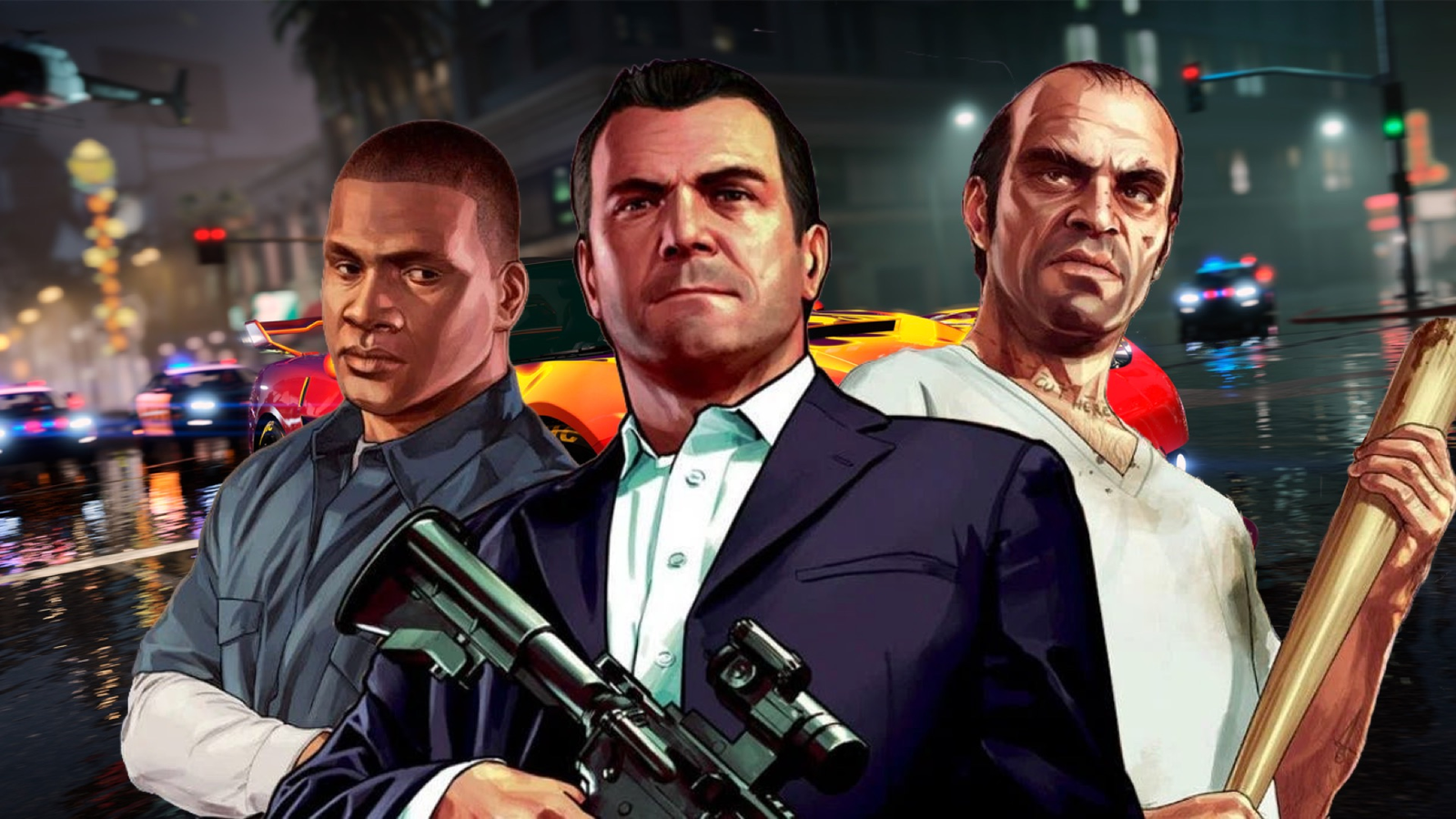
Many games teach players to avoid mistakes because failure interrupts progress, forcing you to fall, die, reload, and repeat until you discover the correct solution. GTA, however, approaches failure differently, since a bad decision often creates another playable situation instead of immediately stopping everything. When you steal the wrong car in front of the wrong person, hit traffic while escaping, or attract police attention at the worst possible moment, what should have been a simple journey quickly transforms into a completely different sequence of decisions.
This design idea is central to the franchise, because consequences exist and give weight to actions, yet they rarely last long enough to discourage experimentation. A reckless turn might destroy the vehicle you intended to keep, but it also forces you to adapt by finding another one, while a failed escape route may increase police pressure even as it turns the chase into a new challenge. Even losing money or ammunition rarely shuts down progress entirely, which keeps the experience moving forward.
That balance creates a form of controlled irresponsibility, where players understand that mistakes matter but also recognize that most of them can be survived, escaped, or eventually forgotten. Because punishment rarely becomes permanent, curiosity tends to outweigh caution, encouraging players to test boundaries rather than avoid them.
This dynamic explains why GTA supports such varied playstyles without explicitly instructing players to be creative. Some players follow missions carefully, while others deliberately push situations to the edge just to see how far things can go before collapsing. Both approaches feel valid because the game treats consequences as part of the experience rather than as simple penalties.
The real brilliance lies not in allowing players to break rules, since many games already do that, but in ensuring that the response to those broken rules creates something engaging enough to keep playing.
2. The Wanted System Turns Crime Into a Conversation Between the Player and the World
The wanted system clearly demonstrates how GTA transforms consequences into gameplay, since each action triggers a response that escalates depending on how far the player pushes the situation. A minor offense may result in manageable pressure, but continued escalation brings more vehicles, tighter pursuit, and fewer safe options, effectively asking how long the player is willing to continue before escape becomes necessary.
This gradual escalation matters because it gives criminal behavior a readable structure, allowing players to understand when they have crossed another threshold. Instead of every offense producing the same punishment, the system increases pressure step by step, creating a kind of negotiation between risk and survival.
Experienced players begin to read this system instinctively, recognizing when a pursuit can be ignored, when a change of direction might be enough, or when continuing to fight will only make escape more difficult. In this way, police are not simply enemies that appear after illegal behavior, but rather a dynamic cost attached to each decision.
The system also creates a powerful emotional shift, as players can move from confidence to urgency within seconds, especially when a small mistake attracts more attention than expected. Because this shift grows directly from player actions, it feels natural rather than forced.
What keeps the system enjoyable is that escape restores possibility, since once the pursuit ends, the city becomes available again instead of permanently treating the player as a fugitive. The world reacts strongly, but it eventually lets go, which is essential for maintaining experimentation.
If every crime followed the player forever, the experience would become exhausting, while a lack of reaction would make crime meaningless. GTA succeeds because it exists between those extremes.

3. Vehicles Make Failure Flexible Because Losing One Plan Usually Creates Another
Cars in GTA are often seen as transportation or collectibles, yet their deeper role lies in enabling quick recovery from mistakes. When a vehicle crashes, becomes unusable, or attracts too much attention, players can usually replace it with something nearby, which keeps the experience moving forward instead of forcing a reset.
In more restrictive games, losing a required vehicle might mean reloading, but in GTA, losing one car often leads to a different approach. Players grab another vehicle, adapt to its handling, take unfamiliar routes, or improvise based on what the environment provides, which keeps each situation dynamic.
This adaptability is a major reason driving remains engaging even after players know the map well, since the same route can feel different depending on traffic, speed, damage, and pressure. Vehicles also influence how players assess risk, as fast cars create confidence until they become difficult to control, while durable vehicles offer safety at the cost of maneuverability.
Most importantly, vehicles allow GTA to recover from chaos without interruption, since losing control does not necessarily mean failure. Instead, the city constantly provides alternatives, allowing players to continue rather than restart.
This creates a rhythm where players use something, damage it, abandon it, replace it, and continue, reinforcing the idea that plans are useful but never essential. Because nothing is too valuable to lose, the game encourages constant adaptation.
4. GTA’s Mission Design Is Most Frustrating When It Forgets What Makes the Open World So Good
GTA contains a long-standing contradiction, since its open world encourages improvisation while certain missions restrict that freedom significantly. Outside missions, players experiment freely, but during scripted sequences, they may be required to follow specific routes, use particular vehicles, or complete objectives in a fixed order.
This contrast becomes one of the franchise’s most noticeable weaknesses, especially when the game punishes creative solutions that would logically work. Driving too far from the intended path or attempting an alternative approach can result in failure, even though the open world suggests flexibility.
The strongest missions avoid this issue by providing clear goals while allowing players to decide how to achieve them. Heists, for example, often succeed because preparation, approach, and execution combine into something that feels personal, even within a structured framework.
Weaker missions, on the other hand, reveal the limitations behind the sandbox, making the experience feel artificially constrained. This problem stands out more in GTA than in linear games, because the surrounding world constantly demonstrates how flexible the systems can be.
Once players experience the freedom of solving problems in their own way, being forced into a single solution feels restrictive. GTA works best when missions create pressure without dictating every step, allowing improvisation to remain part of the experience.

5. The Satire Works Best When the Player Participates in the Joke
GTA is widely known for its satire, which appears in advertising, radio, exaggerated corporations, and cultural commentary, yet its most effective moments often come from gameplay rather than dialogue. Players actively participate in the behaviors the game critiques, which makes the satire more impactful.
Characters chase money while players do the same, and although the world mocks consumerism, expensive vehicles, properties, and weapons remain desirable rewards. This contradiction is intentional, as it places players inside the joke rather than outside it.
A player may laugh at exaggerated advertisements while simultaneously planning their next purchase, creating a tension that strengthens the satire. Because players engage in the same behaviors being criticized, the commentary feels more personal.
This dynamic extends to violence and ambition, as GTA presents exaggerated systems where escalation becomes entertaining, while surrounding them with characters who treat absurdity as normal. The result works because the game rarely pretends the player occupies a morally neutral position.
Although not every joke lands and some references age unevenly, the strongest moments occur when gameplay and commentary align. GTA does not simply describe obsession with money and power; it encourages players to experience that obsession directly.
6. Money Is Useful Until It Stops Changing What You Can Do
Economic progression plays a major role in GTA, since money transforms criminal activity into tangible rewards such as vehicles, weapons, properties, and customization options. Early in the game, these purchases feel meaningful because they expand what players can do.
However, problems arise when money stops affecting gameplay and becomes just another number to increase. While early purchases improve capability, later progression, especially in online modes, can feel less impactful, as expensive items provide goals without significantly changing how the game is played.
This creates a situation where players continue earning money primarily because new items exist, rather than because those items meaningfully enhance the experience. As a result, progression can feel like a treadmill, where activity continues without deeper satisfaction.
The strongest version of GTA’s economy allows players to reach a point where money creates freedom, while weaker implementations turn wealth into maintenance, requiring constant effort to stay engaged with new content.
Because GTA’s fantasy revolves around escaping limitations, an overly demanding economy can undermine that idea. Instead of enabling freedom, money becomes something players must constantly chase.

7. GTA Online Changed the Meaning of Consequences Because Other Players Remember What the World Forgets
Single-player GTA worlds are designed to forgive, since police eventually stop searching, vehicles can be replaced, and failed plans can be retried. However, multiplayer introduces a different kind of consequence, because other players remember actions in ways the game world does not.
This changes the experience significantly, as reputation, rivalry, cooperation, and conflict can persist beyond individual events. A random encounter may lead to ongoing interaction, while a shared failure can become a memorable story.
GTA Online adds a layer of consequence based on human memory, which makes the experience more unpredictable than single-player modes. Players assign meaning to actions, turning simple events into lasting interactions.
Roleplay communities extend this further by creating persistent identities and social rules, where consequences are shaped collectively rather than by game systems alone. This transforms GTA into a platform for social performance rather than just a game.
While this model increases longevity, it also introduces inconsistency, since other players can create both memorable experiences and frustrating situations. The same unpredictability that adds energy can also disrupt carefully planned activities.
Even so, GTA Online highlights an important idea: while the world may forget your mistakes, other players often do not.
8. GTA’s Greatest Influence Is Not the Size of Its Maps but the Way It Makes Recovery Part of the Fun
Many games have copied GTA’s visible features, such as large cities, vehicles, and open-world activities, yet fewer have replicated the underlying rhythm that connects these systems. GTA allows players to create problems while ensuring those problems remain playable.
Instead of making failure catastrophic, the game provides tools to recover, allowing one situation to evolve into another. A journey can become a chase, which can lead to losing a vehicle, which then forces a new plan, creating a continuous flow of events.
This design emphasizes continuity rather than randomness, as the game keeps moving forward without constantly resetting progress. Because of this, GTA has influenced open-world design beyond surface-level imitation.
The key idea is that systems should remain useful even when players make mistakes, allowing failure to become part of the experience rather than an interruption.

Conclusion
GTA’s longevity is often attributed to freedom, scale, or storytelling, yet one of its most important strengths lies in how it handles consequences. Actions matter because the world reacts, but those reactions rarely prevent players from continuing.
Stealing a car, attracting police attention, or making poor decisions all create consequences, yet none of them permanently end the experience. Instead, the game pushes back before allowing players to recover and continue.
This structure encourages experimentation, since failure remains part of the gameplay rather than a stopping point. While the franchise has weaknesses, including restrictive missions and repetitive progression, its core design remains strong.
GTA stands out not just because it allows freedom, but because it ensures that even when things go wrong, there is always another situation waiting to unfold.
Frequently Asked Questions
Why has GTA remained popular for so long?
GTA combines multiple systems, including open-world exploration, driving, crime, and progression, in a way that allows players to create varied experiences.
Is GTA mainly popular because of open world freedom?
Freedom is important, but the world’s reactions give that freedom meaning by introducing consequences.
Why is the wanted system so important to GTA?
It creates escalating pressure that turns criminal behavior into dynamic gameplay.
Why can GTA missions sometimes feel restrictive?
Because they often require specific actions, which can conflict with the flexibility of the open world.
Does money improve GTA’s progression?
Yes, but only when it meaningfully changes gameplay rather than simply increasing numbers.
What makes GTA Online different from the single player experience?
Other players introduce persistent social consequences that the game world alone cannot create.
Is GTA only about causing chaos?
No, because it also involves progression, strategy, and interaction with systems.
What is GTA’s most important contribution to open world game design?
It makes failure flexible, allowing mistakes to become new gameplay situations instead of interruptions.