
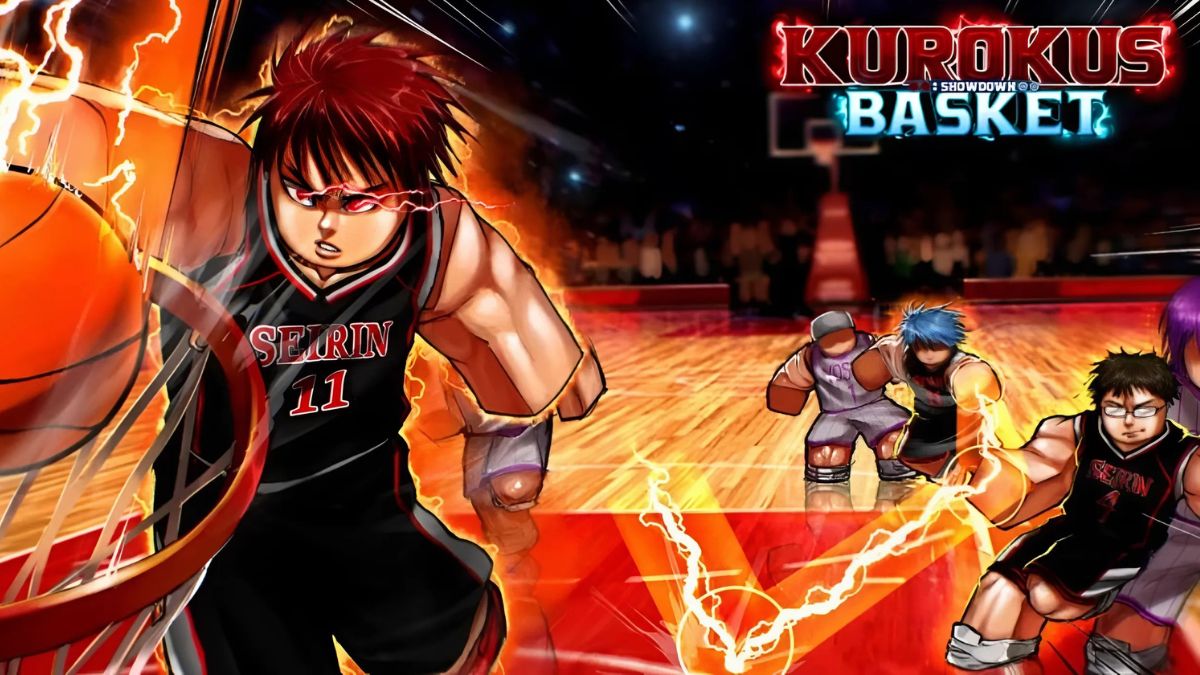



1. Kuroko Basket: Showdown Is Most Intense When You Have the Ball and Almost No Time to Think
The hardest moments in Kuroko Basket: Showdown are often not the spectacular ones. They happen when you receive the ball, look up, and have only a few seconds to decide what the possession is supposed to become. A teammate is cutting toward open space, a defender is closing the gap, another player is waiting outside, and your stamina is already lower than you would like. Shooting is possible. Passing is possible. Driving forward might work. Waiting too long may ruin all three options.
That constant decision pressure gives the game its competitive identity. Many sports titles allow players to rely heavily on mechanical execution once they memorize the controls. Here, good mechanics help, but the important question is whether the action you choose makes sense in the situation. A perfectly timed move used at the wrong moment can be worse than a simple pass made early.
This becomes especially obvious against disciplined teams. Aggressive players who dominate weaker opponents suddenly discover that forcing offense creates turnovers, bad spacing, and easy counterattacks. The defense does not need to steal the ball directly every time. Sometimes it only needs to make the ball carrier uncomfortable enough to choose poorly.
The game therefore creates tension through hesitation. Holding the ball too long becomes dangerous, but rushing creates equally obvious mistakes. Players have to recognize when an opening is real and when it only looks attractive because the defense wants them to commit.
That difference is what keeps possessions interesting. The controls may become familiar, but judgment never becomes automatic because every teammate and opponent changes the shape of the court.
Kuroko Basket: Showdown does not ask whether you know how to perform a move. It asks whether you know when that move is actually worth using.
2. Good Offense Begins Before Anyone Tries to Score
New players often treat offense as a sequence that starts with the person holding the ball. Experienced teams understand that the possession begins much earlier, with movement from everyone else. A teammate occupying the wrong space can make a good pass impossible. Two players moving toward the same area can collapse the offense before a defender even reacts.
Spacing is therefore one of the least glamorous but most important skills in the game. Staying far enough apart creates passing lanes, forces defenders to make choices, and prevents one opponent from covering multiple threats at once. Proper movement also gives the ball carrier options instead of forcing them into an isolated duel.
This becomes more important because players cannot rely on nonstop sprinting. Movement has a cost, and wasted movement creates consequences later in the possession. Running constantly without purpose may look active, but it often leaves a player badly positioned when the ball changes sides or possession is lost.
The strongest offensive sequences are usually simple. One player attracts pressure, another moves into the space created by that pressure, and the ball reaches the open player before the defense can recover. The game feels fast, but the best attacks often come from patience rather than speed.
That makes Kuroko Basket: Showdown surprisingly demanding mentally. A player who never touches the ball during a possession may still be responsible for creating the opening that produces the basket.
Scoring receives the attention, but positioning creates the opportunity.

3. Defense Becomes Easier Once You Stop Trying to Steal Everything
One of the fastest ways to become unreliable on defense is chasing the ball constantly. New players often treat every possession as an opportunity to force a steal, which usually leads to overcommitting, losing position, and giving the offense an easier path than it originally had.
Strong defense is more restrained. Staying between the opponent and the most dangerous space can be more valuable than attempting an immediate challenge. A defender who controls distance forces the ball handler to make another decision, while a reckless defender often makes that decision for them.
This is where anticipation becomes more valuable than reaction speed. Watching how an opponent prefers to attack can reveal habits quickly. Some players always drive after receiving the ball. Others look for the same teammate when pressured. Some become predictable when their stamina drops. Recognizing these patterns makes defensive positioning much easier.
Team defense adds another layer because one player moving too aggressively can damage the entire structure. When someone abandons their assignment, another defender may need to rotate, which creates a new opening somewhere else. A single mistake can therefore produce a chain reaction that ends several seconds later.
The best defenders are often the least dramatic players on the court. They rarely appear desperate because they avoid creating situations that require desperate recovery.
Kuroko Basket: Showdown rewards patience defensively for the same reason it rewards patience offensively. The player who acts first does not always gain the advantage. Sometimes the better decision is forcing the opponent to reveal theirs.
4. Flashy Abilities Are Powerful, but They Become Predictable When Players Depend on Them Too Much
Anime-inspired abilities give Kuroko Basket: Showdown much of its visual personality. They create dramatic plays, exaggerate movement, and give different styles a stronger sense of identity. Yet the more competitive the match becomes, the more obvious it is that abilities work best as tools rather than entire strategies.
Players who rely too heavily on one signature option eventually become readable. Opponents begin expecting the same attack sequence, the same timing, or the same escape move. Something that initially looks unstoppable becomes much easier to defend once everyone knows when it is coming.
This creates an interesting relationship between fundamentals and special mechanics. Abilities can create advantages, but passing, movement, stamina management, and awareness determine whether those advantages become useful. A powerful move used without support may produce less value than a simple action that improves the entire possession.
The strongest players often hide their intentions better. They use ordinary movement to create uncertainty, then introduce a special ability only when the defense has already committed. That makes the move feel more effective because it becomes part of a larger decision rather than a predictable opening action.
This also makes individual style more interesting. Two players using similar tools can look completely different depending on how aggressively they attack, how often they pass, and how willing they are to wait.
Kuroko Basket: Showdown becomes less interesting when abilities replace basketball decisions. It becomes much better when abilities amplify those decisions.

5. Stamina Quietly Determines More Possessions Than Players Realize
Stamina rarely creates the most memorable highlight, but it influences almost everything surrounding those highlights. Sprinting too often, chasing unnecessarily, or constantly changing direction may seem harmless during the opening minutes of a match. The consequences appear later, when a player needs one more burst of movement and no longer has it.
Good stamina management changes how players approach both offense and defense. Instead of moving continuously, experienced players choose when acceleration actually matters. They conserve energy while maintaining useful positioning, then spend it when the possession creates a genuine opportunity.
This becomes especially important during transitions. After losing possession, a team may need to recover immediately before the opponent reaches open space. Players who wasted energy earlier can suddenly become the reason the defense arrives late.
The same problem appears offensively. A player who enters every possession at full speed often becomes easier to predict because they rarely change rhythm. Slowing down occasionally creates contrast, which makes the next acceleration more dangerous.
Stamina therefore affects more than physical movement. It changes decision quality. A tired player may force a pass because they cannot reposition properly, settle for a poor shot because another drive feels impossible, or fail to rotate defensively after a turnover.
The best players seem faster partly because they waste less movement. They are not always sprinting. They simply have energy available when everyone else suddenly needs it.
6. The Scoreboard Changes How People Play Long Before the Match Is Actually Decided
One of the most interesting parts of Kuroko Basket: Showdown is watching players change behavior when the score starts creating pressure. A small deficit can suddenly make a team rush. Someone attempts a difficult shot too early, another player abandons defensive positioning to chase a steal, and the opponent scores again because the losing team became impatient.
The scoreboard therefore creates psychological mistakes that the mechanics alone cannot explain. Teams do not always lose because they lack skill. Sometimes they lose because they stop playing the way that kept the match close in the first place.
Comebacks often begin when someone restores structure. A clean defensive stop slows the opponent’s momentum. A safe pass prevents another careless turnover. One successful possession creates enough confidence for the next defensive rotation to feel calmer.
This is why no lead feels completely secure when both teams are capable. The losing side does not need a spectacular sequence immediately. It needs several good decisions in a row. Once the gap begins shrinking, pressure transfers to the team that was previously comfortable.
The strongest competitors understand that momentum is partly emotional. They know when to accelerate and when to reduce chaos. They do not interpret every missed shot as a reason to become more aggressive.
Kuroko Basket: Showdown creates some of its best matches when the scoreboard begins affecting behavior. At that point, players are competing against more than the opposing team. They are also competing against their own impatience.

7. Improvement Becomes Obvious When You Start Making Fewer Unnecessary Decisions
Early improvement usually looks dramatic. Players learn controls, discover stronger moves, understand shooting timing, and become more confident with the ball. Later improvement is much harder to notice because it often involves doing less.
An experienced player may stop attempting low-percentage steals. They may sprint less, hold the ball for a shorter time, or pass before pressure arrives instead of after. None of these changes produces an obvious highlight, but together they make every possession cleaner.
This is where the game develops a strong competitive learning curve. The player who once measured success through points begins noticing turnovers, defensive recoveries, passing options, and wasted movement. Their understanding shifts from individual actions toward possession quality.
Mistakes become easier to diagnose as well. A failed possession is no longer simply “we missed.” Perhaps the spacing collapsed before the shot. Maybe the ball handler held possession too long. Perhaps one unnecessary sprint left the defense unable to recover afterward.
That awareness makes losses more useful. Instead of treating every defeat as evidence that the opponent had better abilities, experienced players can identify specific decisions that created the result.
The game rewards this type of growth because fundamentals remain relevant even when mechanics improve. Better reflexes help, but cleaner judgment creates consistency.
The biggest sign that someone has improved is often not that they make more spectacular plays. It is that they give themselves fewer opportunities to make avoidable mistakes.
8. Kuroko Basket: Showdown Is Worth Playing in 2026 Because Every Match Exposes Different Weaknesses
Kuroko Basket: Showdown works because it creates competition from simple basketball decisions rather than relying entirely on progression or spectacle. Passing, spacing, stamina, defense, timing, and special abilities all matter, but none functions independently. A player can be mechanically strong and still damage the team through poor decisions.
That interdependence gives matches strong replay value. One opponent may pressure aggressively, forcing faster ball movement. Another may defend conservatively, requiring more patience. Some teams rely heavily on one scorer, while others spread responsibility across the lineup.
The game’s weaknesses become noticeable during uneven matches. Poor teamwork can make games frustrating, especially when players force offense or abandon defensive structure. Competitive intensity can also become exhausting when mistakes are punished immediately, and certain abilities may feel disproportionately influential depending on balance changes.
Yet the core remains strong because the game makes improvement visible through decision-making. Better players do not simply unlock stronger options. They recognize space sooner, waste less stamina, choose safer passes, and understand when not to force a play.
For players who enjoy fast multiplayer sports games with anime energy and genuine team dependence, Kuroko Basket: Showdown remains compelling in 2026. Its best matches feel less like a sequence of highlights and more like a long argument between two teams trying to prove who can make fewer bad decisions under pressure.

Conclusion
Kuroko Basket: Showdown succeeds because every possession creates a small problem that needs to be solved quickly. The ball handler chooses between attacking and passing. Teammates decide where to move. Defenders decide whether to pressure or protect space. Every action changes what becomes possible several seconds later.
That structure makes teamwork meaningful without reducing individual skill. A talented scorer can change a match, but strong teams make those scoring opportunities easier to create. Defensive discipline, smart rotations, and controlled pacing often matter more than trying to manufacture a highlight on every possession.
The game is not perfect. Matches can become frustrating when coordination collapses, and aggressive players sometimes turn teamwork into a secondary concern. Balance between abilities can also influence competitive discussions heavily.
Still, the game remains engaging because its most important skill cannot be unlocked through progression. Judgment improves only through experience.
Winning feels good.
Understanding why a possession worked feels better.
Frequently Asked Questions
Is Kuroko Basket: Showdown difficult for beginners?
The controls are approachable, but competitive matches can be demanding because players need to understand spacing, passing, defense, stamina, and timing simultaneously. Beginners improve faster by focusing on simple decisions instead of trying to create highlights immediately.
Are special abilities more important than fundamentals?
No. Abilities can create strong advantages, but poor positioning, bad passes, wasted stamina, and weak defense can still lose matches. Fundamentals make special abilities more effective.
What is the biggest mistake new players make?
Forcing offense is one of the most common problems. New players often try to score immediately instead of waiting for a better passing lane or defensive mistake.
How important is teamwork?
Extremely important. Good spacing, passing discipline, rotations, and defensive support allow teams with average mechanics to compete against individually stronger opponents.
How can players improve defensively?
Stop chasing the ball constantly. Focus on maintaining position, anticipating preferred routes, protecting dangerous space, and forcing the opponent into lower-quality decisions.
Why does stamina matter so much?
Stamina affects both attack and recovery. Players who waste movement early may lack the energy needed to defend transitions, create separation, or recover after mistakes later.
Can one strong player carry an entire team?
A highly skilled player can influence the match significantly, but coordinated opponents can limit individual impact through spacing, rotations, and disciplined defense. Long-term success depends more heavily on team structure.
What gives Kuroko Basket: Showdown long-term replayability?
Replayability comes from changing opponents, team compositions, player habits, tactical adjustments, and the constant opportunity to improve decision-making. The mechanics may become familiar, but every match creates different problems to solve.