


1. Reaction Speed Matters Less When You Are Already Standing Where the Ball Wants to Go
New players in Haikyuu Legends often experience volleyball as a constant emergency, because they wait until the ball is clearly moving toward a location before deciding where to run, which means every receive feels rushed and every defensive attempt becomes a race against the trajectory. The controls may seem difficult during these early matches, yet part of the problem comes from reacting to information too late rather than lacking mechanical speed.
Experienced players begin moving earlier because they stop treating every ball as completely unpredictable. The position of the opposing player, the angle of an approach, the location of teammates, and the previous contact all provide clues about where the next play is likely to develop, allowing defenders to reduce the distance they will eventually need to cover.
This changes the appearance of good play. Beginners often look extremely busy because they are constantly correcting poor starting positions, while stronger players can appear calmer because several important decisions were already made before the ball crossed the court.
Anticipation does not mean guessing blindly. Moving too early toward one possibility can create an even larger weakness somewhere else, so the real skill is adjusting enough to improve the next position without committing so heavily that another outcome becomes impossible to defend.
Haikyuu Legends becomes much easier to understand once movement stops being viewed as a response to the ball and starts being viewed as preparation for what the ball might become.
2. The Court Is Small Enough That One Wrong Step Can Change Several Players’ Responsibilities
A volleyball court appears simple compared with the large environments found in many multiplayer games, but limited space is exactly what makes positioning complicated. When one player moves toward the ball, they do not merely change their own location, because they also change which areas teammates must cover and what options remain if the first attempt fails.
This creates a constantly shifting map of responsibility.
Two players chasing the same receive may successfully keep the ball alive, yet the team can still be in trouble because both have abandoned the positions needed for the next contact. Someone who moves too close to the expected set can crowd the attacker, while a defender who follows the ball unnecessarily may expose a section of court that nobody else can reach in time.
Good positioning therefore cannot be judged only by whether the player touched the ball. Sometimes the correct movement ends with another teammate making the play, because the value of the adjustment was preserving coverage rather than claiming possession.
This is especially important in public matches where communication is inconsistent. Players cannot assume everyone will interpret the situation identically, so readable positioning becomes a form of silent coordination. Standing in a sensible area tells teammates what you are prepared to cover and reduces the chance that several people will commit to the same problem.
The court may be small, but every unnecessary movement redistributes space.
That makes discipline more valuable than simply chasing whatever looks urgent.

3. A Bad First Contact Can Make the Next Player Look Worse Than They Actually Are
Volleyball naturally divides attention between visible actions. A missed spike is obvious, an inaccurate set is easy to notice, and a failed block can immediately cost a point, yet the quality of those actions is often shaped by what happened one contact earlier.
A difficult receive may force the setter into an awkward position, reducing the number of useful attacking options. The resulting set may then arrive at a poor angle, forcing the attacker to make a low percentage decision that appears to be an individual mistake even though the difficulty began much earlier.
This chain reaction is one of the most interesting parts of Haikyuu Legends because mistakes rarely remain isolated.
Strong players learn to distinguish between an ideal play and the best play still available after something has already gone wrong. When the first contact is poor, trying to force the original attack can create an even worse situation, while accepting a safer second option may keep the rally alive long enough to rebuild structure.
This requires flexibility because players must stop evaluating every touch according to perfect conditions. A set that would be mediocre after a perfect receive can be excellent if it rescues a difficult ball, just as a controlled attack may be more valuable than attempting maximum power from a terrible position.
The game becomes less frustrating when players understand these relationships. Not every failed attack began with the attacker, and not every successful save completely solved the problem.
Often, one contact simply determines how difficult the next contact will be.
4. Committing Early Creates Power but Also Removes the Ability to Change Your Mind
Many of the strongest actions in Haikyuu Legends require commitment. An attacker needs to approach, a blocker needs to position for the jump, and defenders must decide which spaces deserve priority before the ball reaches its final direction. Waiting forever preserves flexibility but makes strong execution impossible, while moving too early allows opponents to exploit the decision.
This creates a constant tension between preparation and concealment.
An attacker who reveals the intended approach too soon may make the block easier to organize. A blocker who commits completely to one player can create an open opportunity elsewhere, while a defender who shifts aggressively toward an expected attack may leave another part of the court exposed.
The best players therefore do not simply make faster decisions. They delay irreversible decisions until enough information exists, while still preparing early enough that execution remains possible.
This distinction becomes more important against experienced opponents because predictable behavior is easier to exploit than mechanically imperfect behavior. A player may have excellent timing and strong abilities, yet repeatedly approaching from the same location or committing at the same moment gives the opposing team information before the important contact occurs.
Haikyuu Legends rewards players who understand that every movement communicates something. The closer a decision gets to becoming irreversible, the more certain the player should be that the information justifying it is reliable.
Powerful actions need commitment.
Smart players are careful about when they stop giving themselves alternatives.

5. Blocking Is Effective Even When the Blocker Never Touches the Ball
Blocks are easy to evaluate when they produce an immediate point, because stopping a spike directly creates an obvious reward. Their more subtle value comes from changing what the attacker believes is available before the attack happens.
A well positioned blocker can remove an attractive angle, encourage the hitter toward a less comfortable direction, or force an adjustment that makes the ball easier for defenders behind the block to handle. In these situations, the blocker influences the rally without receiving credit through a direct contact.
This makes blocking a spatial tool rather than simply a contest at the net.
Poor blockers often chase the ball too literally, reacting after the attack has already developed, while better players focus on reducing options. They understand that covering everything is impossible, so the goal is to make the opponent choose from a smaller and more predictable set of possibilities.
The defensive players behind them benefit from that limitation. If a block reliably discourages one direction, the rest of the team can position with greater confidence around the attacks that remain available.
Of course, overcommitting creates risk. A blocker focused too heavily on one threat may leave another attacker with far more space, so successful blocking depends on reading the developing play rather than jumping simply because an attack appears possible.
The most effective block is not always the one that touches the ball.
Sometimes its value is making the attacker send the ball exactly where the defense was already waiting.
6. Serving Becomes More Interesting When Placement Creates Movement Before the Rally Properly Begins
Serving can easily become a search for maximum speed or difficulty, especially when powerful serves produce immediate points against weaker receivers. Against more organized teams, placement often becomes just as important because the serve determines who must move, who takes the first contact, and how comfortable the receiving side will be when building the next action.
A serve directed toward an awkward space can create confusion even without being exceptionally powerful. Two players may hesitate because both believe the other should receive, while targeting a particular defender can force another player to adjust the normal formation before the rally develops.
This makes serving the first positional decision of the point rather than a separate mechanic that exists only to put the ball into play.
Repeatedly targeting the same area can also create patterns, which experienced opponents may eventually recognize and prepare for, so variation becomes useful when it changes how the receiving team positions itself. A serve that is technically less dangerous can still have strategic value if it forces the opponent into an uncomfortable first contact.
The important outcome is not always an immediate ace.
Sometimes a serve succeeds because the receiving team begins the rally slightly out of position, and that small disadvantage survives through the next set and attack.
Haikyuu Legends becomes deeper when players start noticing these indirect effects, because the point often develops from positional consequences created several touches before the final score.

7. Strong Teams Recover Their Shape Faster After Chaos
No team maintains perfect positioning throughout an entire rally. Unexpected saves, awkward rebounds, mistimed contacts, and unusual trajectories eventually pull players into places they never intended to occupy, which means even a disciplined formation can disappear within seconds.
The important difference is how quickly players recover after the emergency.
Beginners often continue following the ball after making a difficult save, remaining close to the action even when another teammate now has responsibility for the next contact. This creates clustering, where several players occupy one small area while large sections of the court remain undefended.
Experienced players recognize when their immediate job has ended and begin moving toward the position that will matter if the rally continues. They do not assume the point will finish after the next attack, so recovery becomes part of every successful contact.
This habit creates resilience. A team can survive an ugly receive or desperate save without allowing one chaotic moment to permanently destroy its structure, because players constantly rebuild spacing while the ball moves through the next phase.
The principle also explains why some rallies suddenly collapse after a spectacular defensive play. Keeping the ball alive feels like success, but if everyone abandons useful positions to make that save, the opponent may receive an easy opportunity immediately afterward.
A great recovery is only half completed when the ball stays off the ground.
The other half is making sure the team is ready for what happens next.
8. Improvement Often Means Running Less Because Your First Position Keeps Getting Better
New players frequently measure improvement through visible mechanics, including stronger spikes, cleaner receives, better sets, more successful blocks, or increasingly difficult serves. Those skills matter, but one of the clearest signs of experience is often less dramatic: the player stops needing as many desperate corrections.
They arrive earlier because they recognize patterns sooner.
Their movement becomes shorter because their starting position is better.
They commit less often to balls that another teammate can handle comfortably, while recovering more quickly after their own contact because they already understand what the next phase probably requires.
This creates a strange progression where better players may appear less frantic despite processing more information. Their advantage comes not from performing more actions but from reducing unnecessary ones.
Haikyuu Legends still has frustrations. Match quality can vary significantly depending on teammates, new players may struggle to understand positioning without guidance, and competitive balance can shift as particular styles or abilities become popular. Public matches can also become chaotic when several players pursue individual highlights instead of maintaining useful spacing.
Yet these imperfections make positional understanding even more valuable because organized movement can stabilize situations that mechanics alone cannot solve.
The deepest improvement happens when players stop asking only, “Can I reach this ball?”
They begin asking whether they should be the person reaching it at all.

Conclusion
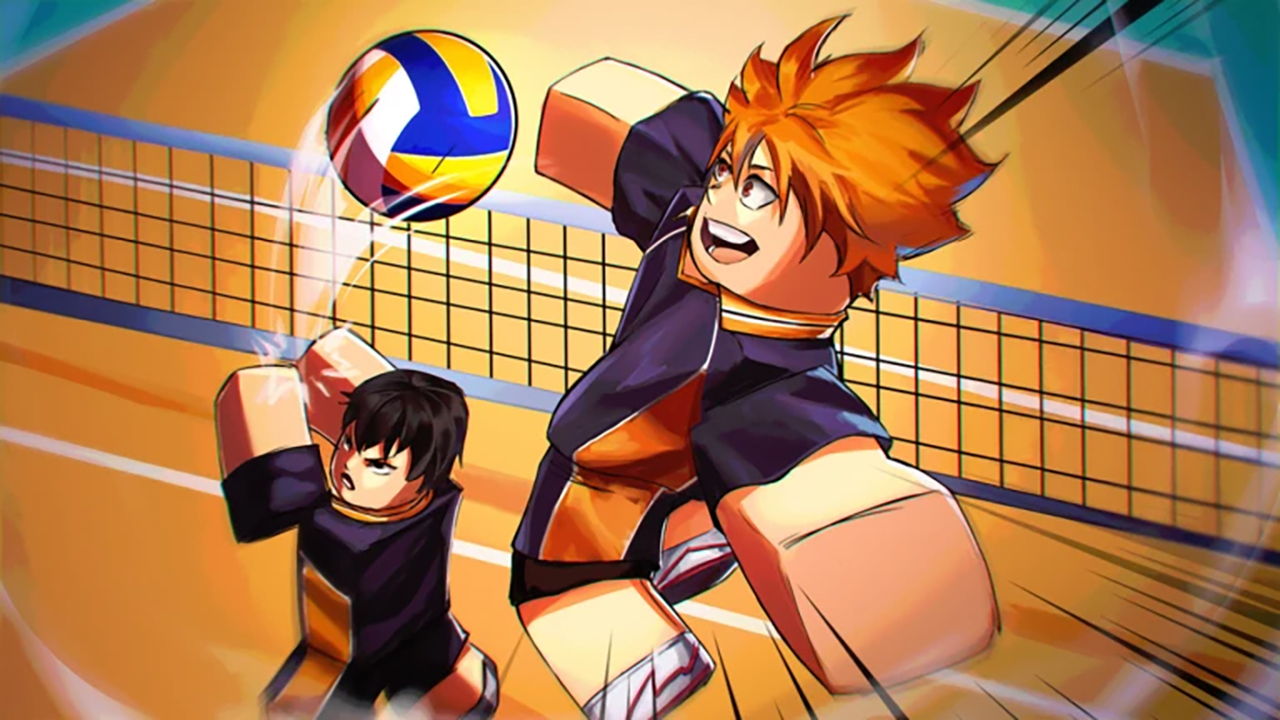
Haikyuu Legends looks like a game decided by visible moments: the spike that scores, the block that stops an attack, the receive that saves the rally, or the set that creates an obvious opportunity.
Many points are actually shaped earlier.
A defender moved two steps before the attack developed.
A blocker removed one angle without touching the ball.
A player resisted chasing a receive that already belonged to a teammate.
Someone recovered into useful space immediately after making the previous contact.
None of these decisions necessarily produce a dramatic animation, yet together they determine whether the next player receives a comfortable situation or an emergency.
This is what gives Haikyuu Legends more depth than its simple court initially suggests. The ball moves quickly enough that waiting for certainty is often too late, but committing without enough information creates openings that experienced opponents can exploit. Players are therefore constantly balancing anticipation with patience, trying to move early without moving so decisively that they lose the ability to adapt.
Mechanical execution still matters, and powerful abilities can influence matches significantly, but good mechanics become much more reliable when positioning has already made the action easier.
The strongest players do not spend every rally chasing the ball.
They spend most of it preparing for a ball that may never come to them.
Frequently Asked Questions
Is Haikyuu Legends worth playing in 2026?
Yes, especially for players who enjoy competitive volleyball, team based matches, positioning, timing, mechanical improvement, and learning how to read developing plays. Match quality can depend heavily on teammates, so public games may vary considerably.
What should beginners focus on first?
Beginners should learn basic court positioning before trying to chase every difficult play, because starting from the correct area makes receives, sets, defense, and recovery much easier.
Why do several players sometimes miss a ball even when everyone is close to it?
Being close does not guarantee good coverage. When multiple players commit to the same ball, they can interfere with one another or leave other areas uncovered, creating confusion about responsibility.
Is reaction speed the most important skill?
No. Fast reactions help, but anticipation can reduce how much reaction speed is required because players who read the developing play early have less distance to cover once the ball’s direction becomes clear.
Why is positioning important after touching the ball?
A rally continues after most contacts, so players need to recover into useful space instead of remaining where the previous action occurred. Poor recovery can make the next defensive or attacking phase much harder.
Can a block be successful without touching the ball?
Yes. Good blocking can remove attacking angles and encourage opponents to hit toward areas where defenders are already positioned, creating value even without a direct block.
Why does serving placement matter?
A well placed serve can force uncomfortable movement, create confusion between receivers, and reduce the quality of the opponent’s first contact, affecting the entire attacking sequence that follows.
What separates experienced Haikyuu Legends players from beginners?
Experienced players usually read situations earlier, move with clearer purpose, avoid unnecessary commitments, recover their position faster, and understand that being useful does not always require touching the ball.