





1. The Game Becomes Addictive When Logging Off Starts Feeling Like Part of the Plan
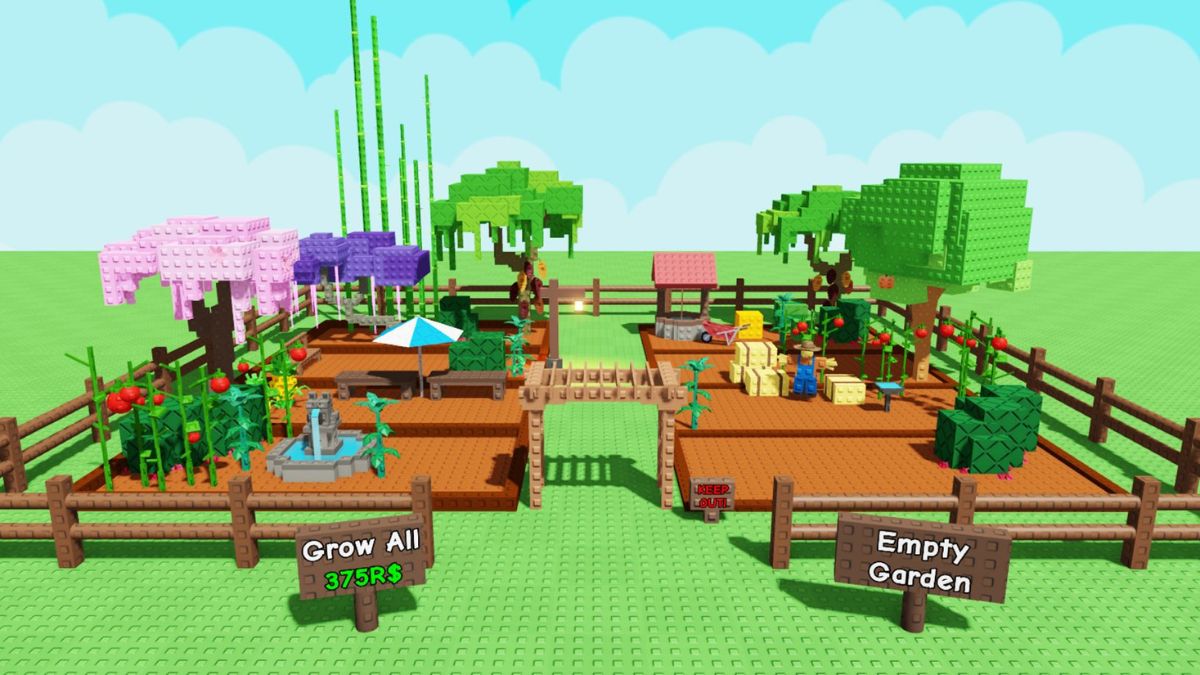
Grow a Garden begins with actions that require almost no explanation, as players obtain something to plant, place it in the garden, wait for growth, collect the result, and then use the profit to continue. What makes this loop unexpectedly effective is that progress is not experienced only through constant activity; instead, the moment you begin thinking about what should happen before the next time you return, the game shifts from a simple farming routine into something closer to a schedule.
Because of this, even a short session can influence a much longer period of play. You might spend a few minutes preparing the garden because you know you will not return immediately, while another session encourages faster decisions simply because you plan to stay online longer. Although the same garden supports both approaches, the priorities feel noticeably different depending on how you intend to use your time.
As a result, time begins to function almost like another currency. While resources determine what you can afford, time determines when those choices become useful, meaning that a valuable crop requiring patience may be ideal during a long break but inconvenient when you want immediate progress. Conversely, something less impressive can become more useful simply because it fits the rhythm of the current session.
This relationship helps explain why Grow a Garden remains interesting despite its straightforward mechanics, since players are not always asking what produces the largest reward. Instead, the more meaningful question often becomes what makes the most sense before the next check, which subtly changes how decisions are made.
Once that mindset develops, closing the game no longer feels like completely stopping, because it feels more like leaving a plan in motion that will continue without you.
2. Waiting Works Because There Is Usually Something Else You Could Be Preparing
Waiting mechanics often damage games when they leave players with nothing meaningful to consider, but Grow a Garden works better because waiting becomes an opportunity to reconsider the rest of the garden. While one part develops, another may need harvesting, currency can be saved or spent, and sections can be reorganized or prepared for future planting.
In addition, even observing what neighboring players are doing can inspire ideas that influence your next decision, which helps prevent every growth period from feeling completely empty. However, the danger appears when the player has already solved most of those decisions, because once routines become automatic, waiting becomes more noticeable as waiting.
At that point, the same cycle that initially felt relaxing can begin to feel slow, largely because there is no longer enough uncertainty between planting and collecting. This is why pacing matters so much, as Grow a Garden needs enough delay to make anticipation meaningful without making progress feel deliberately withheld.
The difference between those two experiences depends heavily on how many useful choices remain available while the clock is moving. Players who approach the game as a race may notice delays much sooner, whereas those who rotate between farming, upgrades, collection, pets, decoration, and observation usually have more ways to fill the same period.
Ultimately, waiting itself is not necessarily the entertaining part; instead, the game works when waiting gives another idea enough time to become the next objective.

3. Weather Is Interesting Because It Can Make a Good Plan Suddenly Feel Outdated
A farming routine becomes predictable once the player knows exactly what they want to plant and what they expect to receive, which is why weather and changing conditions are valuable, as they interrupt that certainty. A player may begin with one objective but then reconsider when conditions create a better opportunity elsewhere, causing the original plan to suddenly face competition.
At that moment, the player must decide whether to continue because the garden is already organized around the initial plan or to change direction while the opportunity still exists. These moments matter more than they initially appear, since farming games can easily become mechanical once an efficient routine has been discovered.
Anything that temporarily changes the value of a decision helps break that routine, especially when events are not simply bonuses handed to the player but instead create reasons to reconsider behavior. This distinction is important because a reward that requires no decision is pleasant but quickly forgotten, whereas a temporary condition that forces a change can affect the entire session.
Such changes may lead to different crops, different spending priorities, or even delays in upgrades that originally seemed more important. However, there is also a risk, as overly valuable temporary opportunities can turn relaxed play into constant monitoring, making players feel that being offline means missing the best moments.
Grow a Garden is most enjoyable when weather makes the garden less predictable without making every absence feel costly, since a good event should encourage reconsideration without creating pressure to stay constantly engaged.
4. Money Creates Better Decisions When You Cannot Immediately Buy Everything You Want
The economy gives Grow a Garden structure because every harvest leads to another choice, whether that involves spending immediately on improvements, saving for something more ambitious, or taking a chance on an opportunity that may become useful later. Early progression makes these choices relatively simple, as almost every improvement feels significant, but as resources increase, decisions become more nuanced.
At that stage, a purchase can be affordable without necessarily being worthwhile, which is when patience begins competing with excitement. Buying something immediately provides visible progress, while saving creates no immediate change but may unlock better options later, forcing the player to weigh delayed value against instant satisfaction.
This tension becomes especially effective in a game with rare opportunities and changing conditions, since perfect planning is difficult. Saving everything can leave the garden underdeveloped while waiting for an ideal moment that may not arrive soon, whereas spending too freely can lead to regret when something more desirable appears shortly afterward.
Because of this, the best economic decisions depend on flexibility rather than a single optimal strategy. Grow a Garden becomes less interesting when every purchase has an obvious order, but it becomes more engaging when multiple reasonable uses of the same resources compete with one another.
In that sense, money should not only answer the question of what you can buy, but also what you are willing to delay because of that purchase.

5. Rare Seeds and Valuable Crops Change the Mood Because They Make Ordinary Space Feel Temporarily Important
Most of a garden becomes familiar very quickly, as players learn what is planted, what is expected, and how each section contributes. However, rare opportunities change that relationship by making a small part of the garden suddenly feel far more important than everything around it.
This is where collection and farming begin to overlap, since a crop is no longer interesting only because of its value but also because of how it was obtained or what it represents. It may matter because it was difficult to acquire, because it reflects a temporary opportunity, or simply because the player wants to keep it rather than immediately converting it into profit.
As a result, a conflict can emerge between economic value and personal value. Selling something may be the efficient choice, but keeping it may make the garden more interesting, especially if the player chooses to reorganize space around it even when doing so is not strictly necessary.
These decisions give individual crops more identity than a purely numerical system would allow, although problems arise when rarity becomes the only thing worth caring about. In such cases, ordinary crops begin to feel like mere steps toward something better rather than meaningful parts of the game.
Grow a Garden works best when common farming still supports progression while rarer discoveries provide variation, ensuring that rarity interrupts routine without making the entire routine feel pointless.
6. Pets and Automation Change the Game Most When They Remove Attention From Tasks You No Longer Enjoy Doing Manually
Progression systems often claim to make players stronger, but in a farming game, one of the most valuable improvements is simply reducing the need to focus on repetitive actions. Pets, upgrades, and automation systems become useful when they remove friction that has already served its purpose, especially after the player has repeated the same tasks many times.
While those tasks may feel engaging during early discovery, they eventually become routine, which is why good progression recognizes when to shift the player’s attention elsewhere. As the garden develops, players should spend less time on basic maintenance and more time on decisions that remain interesting, such as pursuing rare opportunities, improving efficiency, or experimenting with different goals.
Automation, therefore, is not only about faster progress but also about changing where attention is directed. However, there is a tradeoff, since removing too much interaction can make the garden feel like a system that plays itself, reducing the player’s sense of involvement.
The strongest automation systems remove chores without removing ownership of the plan, allowing players to feel less busy over time without making them feel unnecessary.

7. The Real Late Game Problem Is That Efficiency Can Make Every Session Look the Same
Learning how to progress efficiently feels satisfying because uncertainty gradually disappears, allowing players to understand what to prioritize and what provides strong returns. However, this knowledge eventually creates another problem, as routines can become so efficient that there is little reason to change them.
When that happens, sessions begin to look nearly identical, with players logging in, performing familiar actions, collecting expected results, and repeating the same cycle. Although the numbers improve, the overall experience becomes predictable, which is where personal goals become more important than raw progression.
Some players shift their focus toward rare collections, while others prioritize pets, aesthetics, or unusual garden combinations. These goals may not always represent the fastest path, but they give familiar systems a new purpose and help maintain interest.
The healthiest late game is therefore not defined by maximum efficiency but by the freedom to pursue goals that once seemed impractical. Grow a Garden becomes less compelling when optimization dictates every action, but it becomes more engaging when players occasionally choose to deviate from the optimal path.
In this way, knowing the best route represents progression, while choosing when to ignore it prevents the routine from feeling like a job.
8. Grow a Garden Is Worth Playing in 2026 Because It Fits Into Time Players Would Not Give to a More Demanding Game
Many games compete for attention by demanding full concentration, but Grow a Garden succeeds partly because it occupies a different kind of space. A session does not always require a major commitment, as players can return briefly, check progress, collect rewards, make a decision, and leave.
At other times, the same systems can hold attention for much longer, especially when events, rare opportunities, or upgrades change the plan. This flexibility is one of the game’s strongest qualities, although its weaknesses remain clear.
The basic farming cycle can become repetitive, waiting may feel frustrating, and players seeking mechanical challenge may find little to engage them. Additionally, long-term progression can become heavily dependent on collection goals and optimization once the novelty fades.
There is also a delicate balance between encouraging regular returns and creating pressure to check constantly, since limited opportunities can make the game exciting but also risk undermining its relaxed nature.
For the right audience, however, Grow a Garden works because it does not demand the same level of energy every time. Some sessions focus on earning money, others on catching opportunities, and still others on adjusting plans that seemed settled moments earlier.
Sometimes, players simply return to see whether a decision made hours ago was worth the wait, which is often enough to keep them engaged.

Conclusion
Grow a Garden appears simple because most individual actions are straightforward, including planting, harvesting, and spending resources. However, the interesting part lies in how those actions are arranged across time, creating a structure that extends beyond immediate interaction.
Players must consider what to plant before leaving, whether to spend or save resources, and whether temporary opportunities justify changing plans. They must also decide whether upgrades are worth delaying more exciting options, which adds depth to otherwise simple mechanics.
Although the game has clear limitations, including repetition and a lack of mechanical challenge, it still demonstrates something important about relaxed gameplay. Players do not need to be constantly busy to remain invested, as anticipation alone can sustain engagement.
Sometimes, knowing that something started earlier may be ready upon return is enough to transform a brief check into a longer session, which ultimately explains the game’s lasting appeal.
Frequently Asked Questions
Is Grow a Garden worth playing in 2026?
Yes, especially for players who enjoy farming, gradual progression, collection systems, pets, optimization, and low-pressure gameplay, although those seeking constant action may find it too passive.
What should beginners focus on first?
Beginners should focus on understanding the basic farming economy before attempting to optimize everything, as consistent progress is usually more valuable than constantly changing plans.
Why is timing important in Grow a Garden?
Timing matters because growth cycles and changing opportunities influence the value of decisions, meaning that the best choice often depends on when you plan to return.
Are rare crops always better than common crops?
Not necessarily, since rarity can increase desirability, but usefulness still depends on progression goals, available resources, and player preferences.
Do weather events matter?
Yes, because they can change the value and timing of activities while encouraging players to adjust their plans, making sessions less predictable.
Do pets and automation reduce the grind?
They can reduce repetitive tasks and shift attention toward more meaningful decisions, provided they are balanced in a way that maintains player involvement.
Does Grow a Garden become repetitive?
Yes, repetition is one of its main weaknesses, although players who diversify their goals may experience it less quickly.
What gives Grow a Garden long term replayability?
Long-term appeal comes from evolving goals, rare opportunities, economic decisions, pets, optimization, weather systems, and the flexibility to approach each session differently.