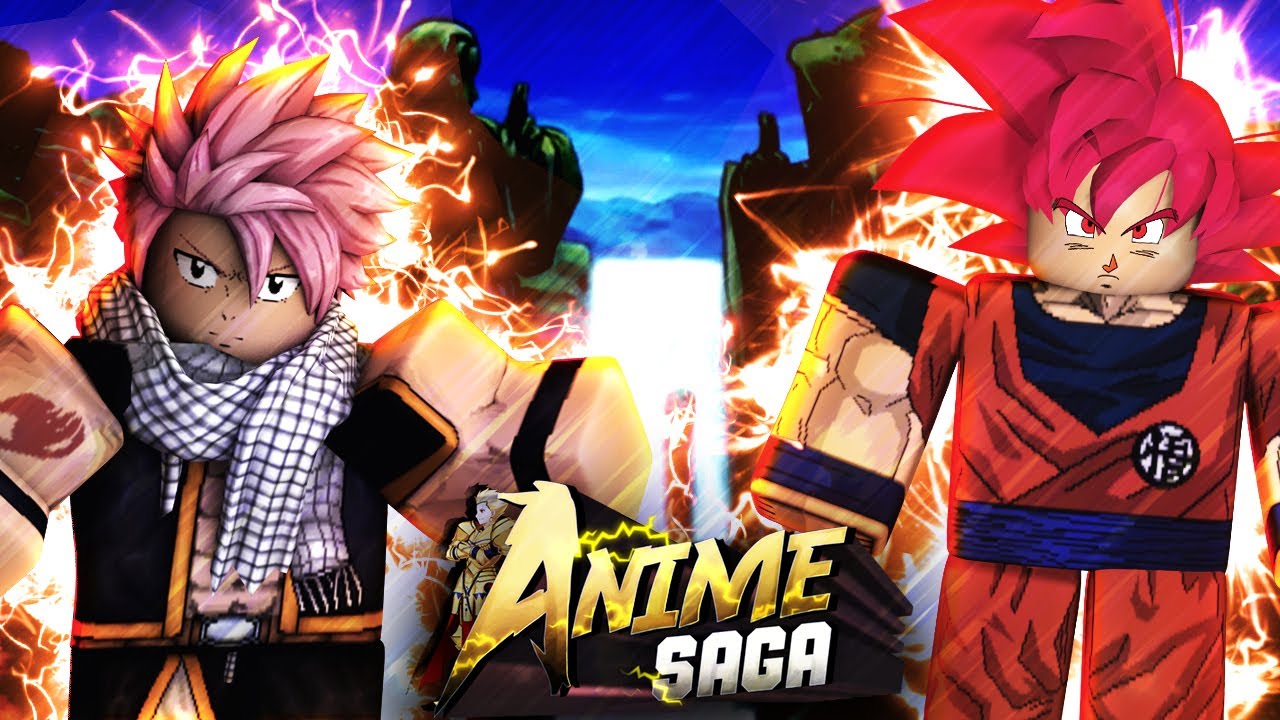


1. Anime Saga Gives You So Many Ways to Improve That Progress Can Easily Become Its Own Distraction
Anime Saga rarely leaves players wondering whether there is something to do. The opposite problem appears much faster. A quest needs finishing, an ability could be upgraded, a better piece of equipment looks obtainable, another area contains stronger enemies, a boss may drop something useful, and several resources are already accumulating without an obvious answer for where they should be spent. Progress surrounds the player from every direction, which initially makes the game feel generous. After several hours, that abundance becomes the first real strategic problem.
I noticed this when a session that should have been straightforward turned into several unrelated farming detours. I started with the intention of improving one ability. That required resources, which pushed me toward another activity. While farming those materials, I realized a different upgrade could make the process faster, so the original goal was temporarily abandoned. By the time I returned to it, several hours had passed and the character was stronger in multiple ways, yet the thing I originally logged in to accomplish was still unfinished.
This is where Anime Saga becomes more interesting than its familiar action RPG structure suggests. The basic loop of defeating enemies, completing quests, collecting resources, and becoming stronger is easy to understand. The difficult part is deciding which improvement actually matters right now. Not every available upgrade produces the same value, and pursuing everything simultaneously can make progress feel slower rather than faster.
Some improvements immediately change how the game plays. A useful ability can make crowded encounters easier, better mobility can reduce wasted travel, and the right equipment may allow content that previously felt inefficient to become manageable. Other upgrades barely affect the experience despite requiring significant time. Learning to distinguish between those categories becomes increasingly important as progression expands.
New players are especially vulnerable to chasing whatever appears closest. A quest marker promises experience, so they complete it. A resource is available, so they farm it. An upgrade exists, so they buy it. This creates constant activity but not necessarily efficient development. The account improves, yet the player may still reach the next difficult encounter without a coherent build or enough resources for the upgrades that would have mattered more.
Anime Saga is at its best when progression feels connected. One decision makes the next objective easier, which then opens access to something genuinely useful. The game becomes frustrating when those connections are unclear and players spend long stretches improving systems simply because they are there.
That difference completely changes the meaning of grind. Repetition feels tolerable when you understand what the reward will solve. Repeating content without a clear purpose feels like maintaining a checklist.
Anime Saga constantly offers another thing to chase.
The deeper skill is learning that you do not have to chase all of them.
2. A Good Build Is Less About Maximum Damage and More About Removing Whatever Wastes Your Time
Damage attracts attention because it produces the clearest evidence of progression. Numbers increase, enemies fall faster, and encounters that once required effort suddenly disappear in a few attacks. It is natural to treat maximum damage as the obvious goal of character development. Anime Saga becomes more efficient, however, when players start evaluating builds by how much friction they remove from everyday gameplay.
A powerful single-target setup may look impressive against bosses but become tedious when ordinary quests require clearing groups repeatedly. Heavy area damage can make farming significantly faster, yet it may struggle when a durable enemy demands sustained pressure. Mobility can appear less exciting than another offensive ability until long sessions reveal how much time is lost simply moving between targets and objectives.
This makes build decisions highly dependent on what the player is currently trying to accomplish. There is no reason to optimize exclusively for difficult bosses while spending most of the session farming regular enemies. Likewise, a farming setup that destroys weak groups instantly may need to change completely before entering harder content.
I spent one stretch experimenting with ability combinations that appeared weaker on paper but made routine progression noticeably smoother. The total damage ceiling was lower, yet attacks covered more useful space and required less repositioning. Farming became faster because fewer enemies escaped the effective area, and I spent less time correcting awkward encounters. The build was technically weaker in one measurement and substantially better in practice.
That distinction becomes more important as players accumulate options. Anime Saga encourages experimentation through abilities, equipment, and different approaches to combat, but copying the highest-damage recommendation does not automatically create the best experience. Efficiency includes survivability, movement, attack coverage, cooldown rhythm, and how often a setup forces you to stop what you are doing.
Familiarity also has value. An ability you understand completely can outperform a supposedly superior alternative if the new option constantly puts you in poor positions or interrupts the rhythm you already developed. Replacing something simply because another choice has better theoretical potential can sometimes make progression slower until the new setup is properly understood.
This is one reason experimentation remains enjoyable even when it is not immediately productive. Testing builds reveals problems that raw statistics cannot. You discover which ability consistently misses moving enemies, which attack leaves you exposed for too long, or which combination looks impressive but requires so much setup that ordinary farming becomes annoying.
The best Anime Saga builds therefore solve inconveniences before they chase perfection. They make common activities smoother, reduce downtime, and match the content being played rather than trying to dominate every situation with one universal answer.
Power matters.
But in a game where players repeat hundreds of encounters, saving thirty seconds again and again can eventually matter more than producing one spectacular damage number.

3. Boss Fights Work Best as Tests of Your Preparation, Not Just Your Reflexes
Bosses in Anime Saga are useful because they expose weaknesses that ordinary farming can hide. A build may feel excellent while clearing groups of weaker enemies, yet the moment a tougher opponent survives the opening burst, problems become obvious. Cooldowns feel longer, poor movement becomes dangerous, survivability starts to matter, and abilities that seemed efficient suddenly reveal awkward gaps in their rotation.
That makes bosses less like isolated spectacles and more like progression audits. They answer a practical question: did the hours spent upgrading actually improve the character in a meaningful way? Sometimes the answer is reassuring. A boss that once felt impossible can later become manageable, confirming that earlier investment paid off. Other times, the encounter reveals that too many resources went into the wrong areas.
Returning to a boss after failing earlier can be one of the most satisfying parts of the game because the comparison is direct. The arena has not changed. The enemy behaves largely the same. What changed is your preparation, build knowledge, equipment, and understanding of when to attack or disengage.
The problem appears when bosses become farming stations rather than challenges. Repeating the same encounter for a specific drop can quickly remove tension once the mechanics are solved. At that point, efficiency matters more than excitement, and the boss becomes another step in a resource route.
Anime Saga is strongest when bosses mark progress rather than stall it. A difficult encounter should reveal what your build still lacks, reward preparation, and open a clearer path forward. When repetition becomes excessive, that sense of achievement starts disappearing.
The best boss fight is not necessarily the hardest one.
It is the one that makes you understand exactly why your character was not ready before.
4. Repetitive Quests Become a Bigger Problem When They Compete With Better Uses of Your Time
Many quests in Anime Saga follow familiar action RPG structures. Defeat a group of enemies, collect rewards, move to the next objective, and repeat the process as stronger areas become available. The simplicity keeps progression easy to understand, but repetition becomes much more noticeable once players begin thinking about opportunity cost.
A quest can provide experience and resources while still being inefficient compared with another activity. Spending twenty minutes completing a chain because it appears in front of you may feel productive, yet the same time could potentially improve equipment, farm a more valuable resource, or prepare for content that unlocks several future advantages.
This is where blindly following objectives can slow progression. The game constantly presents tasks, but availability does not automatically equal importance. Experienced players gradually become more selective. They start recognizing which quests advance several goals simultaneously and which ones mostly consume time.
That distinction also changes how grinding feels emotionally. Repetition is easier to tolerate when one activity satisfies multiple needs at once. Farming enemies that provide experience, useful materials, and progress toward another objective feels much better than repeating content for a single minor reward.
The weakest stretches occur when the player understands exactly what they need but the fastest route still requires doing the same low-variety activity for too long. At that point, progression stops feeling like choice and starts feeling like obligation.
Anime Saga cannot avoid repetition entirely because its progression model depends on it. The more important question is whether the game gives players enough freedom to choose smarter routes around that repetition.
When it does, grinding feels like planning.
When it does not, grinding simply feels long.

5. Exploration Is Valuable When It Changes Your Routine, Not Just When It Shows You Somewhere New
Anime Saga encourages movement between areas, but discovery becomes meaningful only when a new location changes what the player can actually do. A visually distinct zone is pleasant to find, yet its long-term value depends on whether it introduces better farming opportunities, new enemies, useful resources, bosses, or progression options worth revisiting.
This gives exploration a practical character. Players are not wandering purely for scenery. They are constantly evaluating whether a newly discovered area deserves a place in their future routine.
A location with efficient enemy density may become a preferred farming route. Another might contain a boss that turns into an important upgrade target. A region that seemed impressive at first may be abandoned almost immediately if its rewards do not justify the travel time.
That sounds overly mechanical, but it creates an interesting relationship between world design and progression. Places become memorable because of what happened there and what purpose they served. A training area reminds you of an early bottleneck. A distant region becomes associated with a difficult upgrade. Another place remains important simply because it was the first location where your build finally began working the way you intended.
The downside is that efficiency can reduce the sense of adventure. Once players know the best routes, exploration can collapse into repeated movement between a small number of useful locations. The world may be larger, but optimized progression makes it feel smaller.
The best discoveries resist that problem by changing the player’s habits. A new area should not merely look different.
It should make you reconsider where you spend your time.
6. Optimizing Too Early Can Make Anime Saga Feel Like Work Before It Has a Chance to Become Fun
There is a temptation in progression-heavy games to search for the perfect route immediately. Best abilities, best equipment, fastest farming location, strongest build, most efficient resource path. The information is useful, especially when Anime Saga contains enough systems to make poor investments costly. Yet optimizing everything from the beginning can remove one of the most enjoyable parts of the experience: learning through experimentation.
Following the fastest route often means repeating whatever gives the highest return, even when another activity would be more interesting. A player may ignore an unusual ability because it ranks poorly, skip a region because its rewards are inefficient, or avoid testing a build that looks entertaining because it slows progression slightly.
That approach creates a stronger account quickly, but it can also make every session feel transactional.
Some of my better experiences came from doing things that were objectively inefficient. Testing an awkward skill combination, fighting content earlier than recommended, or staying in an area longer because the combat rhythm felt enjoyable produced little measurable progress. Still, those sessions taught more about how the systems behaved than blindly following an optimized route would have.
There is a point where efficiency becomes useful. Later progression can require enough farming that reducing wasted time genuinely improves the experience. The mistake is treating optimization as mandatory before you even understand what parts of the game you enjoy.
Anime Saga works better when players first discover their preferences and optimize around them afterward.
The fastest way to progress is not always the fastest way to become invested.
Sometimes taking the wrong route is how you learn which destination actually matters.

7. Late-Game Progression Becomes More Interesting When You Stop Trying to Build One Character for Everything
Anime Saga becomes more demanding once players reach the point where general upgrades no longer solve every problem equally well. Early progression rewards broad growth because almost any increase in power is useful. Later content begins exposing the limitations of trying to make one setup handle every situation. A build designed for fast farming may struggle against durable bosses, while a setup built around single-target damage can feel unnecessarily slow when clearing large groups of enemies.
This is where specialization starts becoming valuable. Instead of asking which ability is strongest overall, experienced players begin asking what role they actually need the build to perform. One setup might focus on efficient resource farming, another on survivability, while a different combination is reserved for difficult encounters where burst damage or mobility matters more.
Specialization also changes how equipment and resources should be evaluated. An item that looks mediocre in a general comparison may become extremely valuable inside one specific strategy. Likewise, an ability that dominates routine farming may be almost irrelevant in content where positioning and survival matter more than clearing speed.
The danger is overinvesting too early. Building several specialized setups can consume enormous amounts of resources, especially when balance changes or new content alter what players consider optimal. It is usually smarter to establish one reliable foundation before expanding into more situational options.
This gives late-game progression a different rhythm from the opening hours. Instead of simply becoming stronger, players become more deliberate. Resources are no longer spent because an upgrade exists. They are spent because the upgrade solves a clearly identified problem.
Anime Saga becomes deeper when progression stops being a straight line.
The strongest account is not necessarily the one with one overwhelmingly powerful build.
It is the one that has the right answer for several different kinds of content.
8. Anime Saga Is Worth Playing in 2026 If You Enjoy Making Progression Decisions as Much as Fighting
Anime Saga delivers satisfying action quickly, but its long-term appeal depends less on the immediate combat than on the decisions surrounding it. The game constantly asks players where their next hour should go. Leveling, upgrading abilities, improving equipment, farming resources, preparing for bosses, and exploring new areas all compete for attention.
That abundance is both the game’s strength and its main source of friction.
When progression systems support one another, Anime Saga feels rewarding. A smarter build shortens farming time, which accelerates upgrades, which makes harder content practical, which opens access to better rewards. Progress creates momentum because each improvement has a visible purpose.
The weaker moments occur when the same systems begin competing instead of connecting. Grinding for one upgrade may require repetitive content that offers little else of value. A poorly chosen investment can force additional farming later. Quest structures sometimes repeat familiar objectives long after the combat itself has stopped being challenging.
Balance can also shape the experience heavily. Certain abilities or combinations may offer noticeably better efficiency, which encourages players toward similar strategies. Newcomers can feel overwhelmed because the game presents many systems before they fully understand which ones deserve priority.
Still, Anime Saga remains compelling for players who enjoy action RPG progression because it makes planning part of the experience. The best sessions are not always the ones where the most levels are gained. Sometimes the biggest improvement comes from discovering that a farming route is inefficient, replacing an ability that creates unnecessary downtime, or realizing that a resource you have been chasing is not actually solving the problem holding your build back.
For players who want constant novelty without repetition, the grind may become exhausting. For players who enjoy refining builds, testing priorities, and gradually making every hour more efficient than the last, Anime Saga offers a satisfying long-term loop.
The game gives you many ways to become stronger.
Its real challenge is learning which ones are worth your time.

Conclusion
Anime Saga looks straightforward from the outside. Fight enemies, complete quests, gather resources, unlock stronger abilities, and continue toward harder content. That familiar structure makes the game easy to understand, but the deeper experience emerges once progression becomes crowded enough that players cannot pursue everything efficiently at the same time.
This is where the game becomes a problem of priorities rather than raw effort. A higher level is useful, but perhaps improving mobility would save more time. A new ability may look powerful, but the existing setup could already handle the content that matters. A boss drop might be desirable, yet farming it repeatedly could delay several upgrades with greater immediate value.
These decisions give Anime Saga more depth than simply watching numbers increase. The strongest players gradually become better at identifying bottlenecks. They understand when damage is the problem, when survivability is the problem, and when the real issue is wasting twenty minutes on a route that should have been abandoned hours ago.
The game still suffers from familiar progression-heavy weaknesses. Grinding can become substantial, quests sometimes repeat too many similar objectives, and balance changes can affect which investments remain worthwhile. Players who dislike farming may find those systems increasingly difficult to tolerate.
Even so, Anime Saga remains engaging because good progression changes how the entire game feels. A better route makes farming smoother. A smarter build removes unnecessary difficulty. A carefully chosen upgrade can save far more time than several random improvements combined.
Anime Saga rewards effort.
It becomes much more interesting when players learn that effort alone is not enough.
Knowing where to spend that effort matters just as much.
Frequently Asked Questions
Is Anime Saga worth playing in 2026?
Yes, particularly for players who enjoy anime-inspired action RPGs, character progression, build experimentation, boss fights, and long-term resource management. The combat is accessible early, while later progression rewards more careful planning.
Does Anime Saga require a lot of grinding?
Yes. Grinding becomes increasingly important for levels, resources, upgrades, equipment, and other progression goals. The experience is much more enjoyable when players focus on activities that advance several objectives at the same time.
What should beginners prioritize first?
Beginners should focus on a reliable combat setup, useful mobility, steady leveling, and upgrades that make common activities easier. Spending resources on every available system immediately can slow progression later.
Is maximum damage always the best build strategy?
No. Damage is important, but farming efficiency, survivability, movement, attack coverage, and cooldown management can matter just as much. The best build depends heavily on what content you are currently playing.
Are boss fights important for progression?
Yes. Bosses often function as useful checkpoints because they reveal whether a build has enough damage, survivability, and consistency for harder content. Repeated boss farming can become tedious when specific rewards have low availability.
Should players follow optimized progression routes immediately?
Not necessarily. Guides can save time, but optimizing too early can reduce experimentation and make the game feel like work. It is often better to understand the systems first, then optimize around the parts of the game you actually enjoy.
Does exploration matter in Anime Saga?
Yes, especially when new areas provide better enemies, resources, bosses, quests, or farming opportunities. Exploration is most valuable when discovering a location changes how you approach progression afterward.
What gives Anime Saga long-term replayability?
Replayability comes from build experimentation, specialized setups, resource optimization, difficult bosses, progression planning, balance changes, and new goals that require players to rethink how they spend their time. The game stays engaging because becoming stronger is only part of the challenge. Deciding how to become stronger efficiently is the larger one.